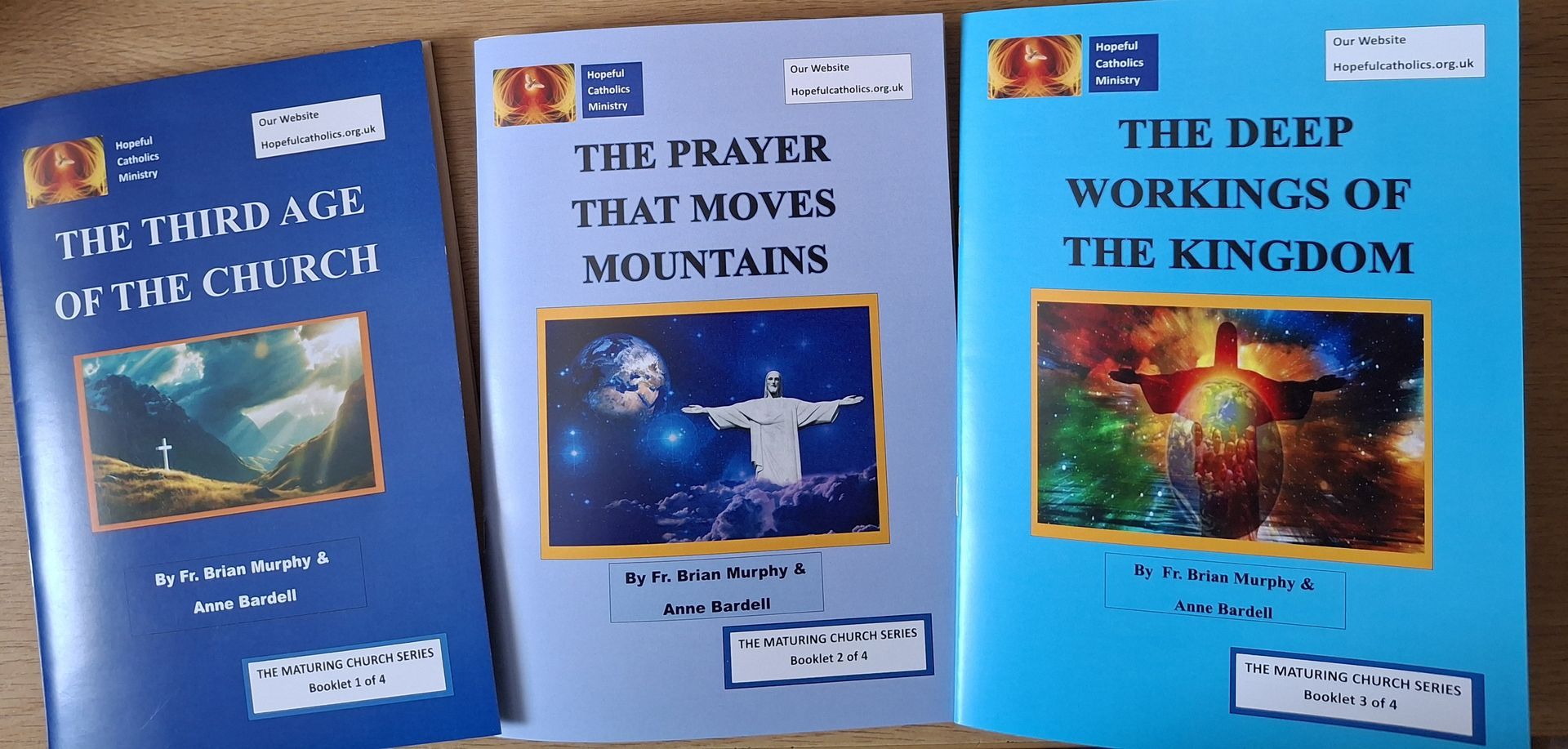
Our new Booklet Series - The Maturing Church
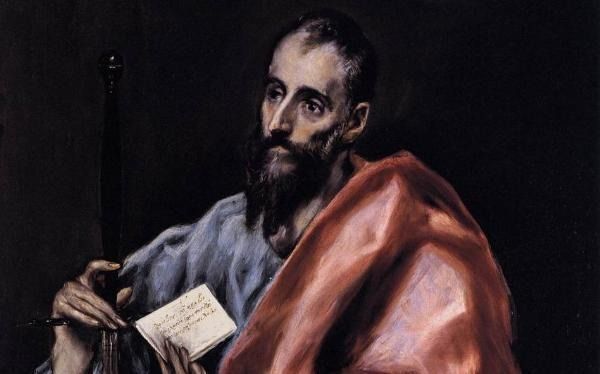
On the day before the beautiful feast of the Assumption of Mary into Heaven, I was privilege to celebrate a special mass at Stanbrook Abbey. We used the Votive Mass of the Holy name of Mary. The responsorial psalm was the Magnificat, the song of Mary to Elizabeth, and the gospel was the account of her visit to Elizabeth. But the first reading was the first verses of St Paul’s letter to the Ephesians – what a torrent of words! You will have heard it before: “Blessed be God the Father of our Lord Jesus Christ, who has blessed us with all the spiritual blessings of heaven in Christ. Before the world was made, he chose us, chose us in Christ, to be holy and spotless, and to live through love in his presence, determining that we should become his adopted sons, through Jesus Christ for his own kind purposes, to make us praise the glory of his grace, his free gift to us in the Beloved, in whom, through his blood, we gain our freedom, the forgiveness of our sins. Such is the richness of the grace which he has showered on us in all wisdom and insight.” And it goes on and on. Who begins a letter like that? And how can we be expected to take it all in in a one-off reading in Church? I think it helps to see it as a song of St Paul. Mary’s Magnificat is a song. They say that “from the hearts overflow the mouth speaks", well from a very full heart’s overflow the mouth sings. Paul’s heart is overflowing here; hence this rich torrent of gems of understanding. It helps to understand St Paul’s functioning. Do you remember how he was viciously attacked by a party in the Church of Corinth which said he wasn’t a real Apostle and that he wasn’t a polished speaker like some of those who came to Corinth after him? In the second letter to the Corinthians, he states firmly that he is as much an apostle as the Twelve, and that he is commissioned by Christ. Then he somewhat tentatively explains how it works. He says that he was taken up onto the “third heaven” and there shown things that could not be put into words. For the rest of his life, his work was to try to put into words those things that cannot be put into words. Every time he preached, taught or wrote, that was what he was doing – the impossible. And he boasts about his weakness before that impossible task, because each time he tried, God came through for him. We might say “the poor man!”, but he glories in his weakness, because it provided a launch-pad for God’s word to arise. If only, we were all like him! And look at Mary singing to Elizabeth. In the last few days, she has been given the unique title “Full of Grace” by the archangel as he knelt before her. Today Elizabeth entitles her “the Mother of my Lord”. It is as though she wants to go down on her knees before the future Queen of Heaven. But what title does Mary give herself? “The handmaid of the Lord”, and to Elizabeth she enlarges that to “lowly handmaid”. She has yet to complete a long journey of faithful cooperating with God in his plan of salvation. She herself will not be complete until she breaths her last and is assumed into glory. We are like her. True, she was Immaculate, but all that means is that she was born without the breakdown of communication with God that we all inherit, but that has been restored to us in Baptism. It does not mean that she would not be tempted and have to constantly throw herself onto the grace of God. See how we are in the best of company, and have real live models to imitate. Mary and Paul pray for us!

Love first In the previous chapter, I spoke of the importance of our will in contemplative prayer. For some people, the two words ‘will’ and ‘contemplative’ can be overlaid with meanings that are not always helpful. ‘Will’ can have vibes of domination and power, which is out of place in the teaching of Jesus. He tells us that it is the poor in spirit who will possess the Kingdom of God, and the meek who will inherit the earth. ‘Contemplation’ can have overtones of mystical experiences which seem only possible to the great saints. That is why I prefer to use the phrase ‘prayer of the heart’; it stresses the radical centrality of love. This is our sharing in Jesus’ loving converse with our Father. He urges everybody to “go into that secret place” and “pray to your Father” (Matthew: 6, 6). It is not just for specially chosen souls. It is for everyone. If our service of God is not charged with love, it is hollow and will produce meagre fruit. A mother will delight in providing favourite foods for her family, she will go out of her way to do so. The lovers of God delight in doing the will of God – even when the cost is high. Hebrews: 10, 5-7 says this of Jesus: “He said, on coming into the world… "God, here I am! I am coming to obey your will" . Obedience can be hard when it is imposed by someone else, especially if it is against what we want. But lovers burn with the desire to carry out the will of their beloved. The prayer of the heart is the school of our love affair with God. It can be hard and we can find a wealth of obstacles within ourselves to prevent us starting it or continuing it, and, yes, it can require will power on our part, but it is the process by which our hearts are drawn into deeper love. Children learn to read by first recognising letters, then words, then they make sense of sentences. All of that is forgotten when they read a book spontaneously. Some children pick up reading quickly, others might have dyslexia and learn to read slowly, but it is a known fact that dyslexic children often penetrate more deeply into the meaning of what they read. We are all different. A busy mum might learn the prayer of the heart by faithfully responding the demands of family life. Most of these demands will be God’s will. A sick person might learn by accepting trustfully the limitations God has given them. A hermit might find that God calls them to persevere in prayer amidst distractions and the sense of futility. All are fulfilling the will of God, and each of them needs to seek space to enter into that ‘secret place’ to talk to the Father. Without entering into that prayer of love, their efforts will burn out, or be overlaid with resentment. Duty What dreadful fruits spring from duty when it does not flow from love! We can become numbed, or bitter, find self-affirmation in denigrating the work of other people, envy, or be filled with pride in our own achievements. Then the train of human progress is pulled by a hand cart. Whereas “those who wait upon the Lord shall renew their strength; they shall mount up with wings as eagles; they shall run, and not be weary; and they shall walk, and not faint” (Isaiah: 40, 31). It is only by withdrawing into the heart, going to that ‘private place’, and there seeking the loving face of our Father, ‘waiting upon the Lord’, that we allow ourselves to be touched by his graceful love. Words fail then, and we are naked before him, but he is running towards us with ‘the best robe’ and a ‘ring’ for our finger’ like the father Jesus describes in his story of the Return of the Prodigal (Luke 15: 11-32). Consolation Only rarely do we find sweetness and light in contemplation. Our hearts are more feeble than we imagine, and in need of much nurturing. The journey to be fully maturity as children of God is long and arduous, but it is the adventure we are made for. The sea is so great and our boat is so small, but the one who built us is the master of storm and sea and the skilful boat builder. His has designed our whole life so as to bring us to fullness in his Kingdom. Jesus assures us: “Fear not little flock, it has delighted the Father to give you the Kingdom” (Luke 15: 11-32). The moments of sweetness and light are there to prepare us for the next steps in following Jesus. But what is growing beneath the barren times of prayer, are spiritual habits of conviction and determination. They are gifts of God planted in our very spirits, not the fruit of our muscular determination. They are the stuff of love.
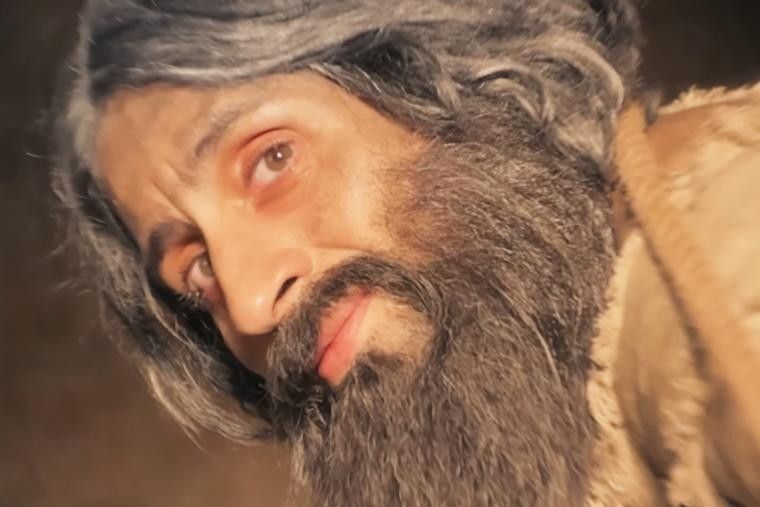
On 29 th August we celebrate the feast of the Passion of St John the Baptist. The story is well known and often told, but it can overshadow his other feastday, the Solemnity of the Nativity of the Baptist on the 24 th of June. Why does he have two: a feastday and a solemnity? Jesus told us that John was “the greatest man born of woman” , which gives a clue. What was so special about his birth? There is a strong tradition in the Church that he was born immaculate. That has not been defined infallibly by the Church, but it is well attested from ancient times. According to the teaching of the Church Fathers, John was freed from original sin as he leapt for joy in his mother’s womb, when Mary, pregnant with Jesus, visited Elizabeth. What does “immaculate” mean, or “free from Original Sin”? A lot of people get hung up on the word sin, because it usually means a personal act of evil, which breaks or weakens our contact with God. Original Sin is not that; it is the state we inherit form the first human beings who revolted against God. It is characterised by an inability to know God naturally; it is spiritual brokenness. We get an indication of this in the words of Jesus at the Last Supper speaking about the coming of the Holy Spirit: “He will show the world how wrong it was about sin… about sin in that it did not believe in me” (John 16:8). What he is teaching is that sin is not primarily an action, but a state of not relating to God. The ancient Fathers of the Church never taught that John was conceived immaculate, but born immaculate. Mary, and Jesus were conceived immaculate. But they and John would have different degrees of closeness to God. If you imagine God to be the sun, John’s experience would have been like the sun peeping above the horizon at dawn; Mary’s would have been like the brightness of noon – Gabriel reverently addressed her as the one “full of grace” . Jesus’ experience would have been like his humanity soaring up into the sun. All this explains Jesus’ words about John, “no man born of woman is greater than he” . But we are to remember that he followed up that statement with the words “yet the least in the Kingdom of heaven is greater than he” . Each of us can describe ourself as the least in the Kingdom of heaven. This tallies with the words of a great father of the Church, Pope St Leo the Great: “Oh Christian acknowledge your dignity!”
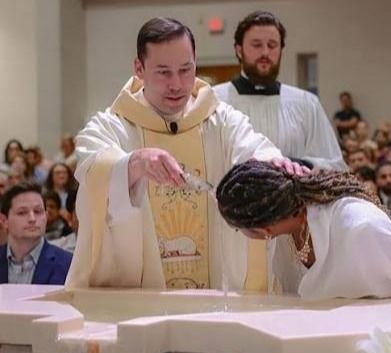
Aware of a growing number of converts to Catholicism in the United States, the Archdiocese of Chicago set out to find out what was driving this renewed interest in the faith. In collaboration with 20 other dioceses, the Archdiocese administered a survey in English and Spanish to 2,127 U.S. residents who participated in OCIA in 2026. OCIA (Order of Christian Initiation of Adults) is the months-long program for adults who want to join the Church. In Britain we call it the RCIA. The intention of the survey was “to better understand what is driving that interest and how the Church should respond.” The report entitled “ Why are so many people becoming Catholic ” sheds light on who the men and women are who came into full Communion with the Church this year and what led them to seek out the Catholic faith. The link for this is: https://www.ncregister.com/commentaries/morse-welcome-to-the-church Chicago survey Why did they come? When it comes to conversions , one of the most foundational questions to ask is: What drew these individuals to the Catholic Church ? The survey found that responses about personal motivation fell in three basic categories: 1. personal hunger, 2. interest in the institutional Church, 3. and attraction to the community experienced in the Church. “Personal growth in goodness, inner peace and an understanding of truth emerged as some of the strongest motivations for exploring the Catholic faith,” the survey reveals, with 84% responding that they were “interested in exploring a deeper spirituality/relationship with God.” Sixty-eight percent responded affirmatively to the statement, “I was attracted to the Church’s sacred liturgy in Catholic prayer, ritual, and the sacraments,” with only slightly lower percentages responding that they were interested in the Church’s wisdom and tradition. The third tier of responses “centred heavily on Church community, positive examples of Catholics in their lives, a desire to connect with family heritage and the Church’s charitable efforts. These were cited less frequently than the other two groups of motivations.” Interestingly, while young respondents had similar responses on the whole to other generations, they responded more on “growing in goodness and virtue (81%), deeper understanding of truth (80%), exploring more about the existence of God and/or the person of Jesus Christ (77%), the liturgy (72%), longevity of the Church’s tradition (70%), belonging and more meaningful relationships (59%), and healing or redemption from a personal challenge (56%).” Who are they? The survey acknowledges a perception that more women than men have joined the Church. But the survey found that the numbers between the sexes are fairly balanced, with only a slight majority falling to women (54%) over men (46%). The survey report from the Archdiocese of Chicago notes that potentially those with lower education levels are an underrepresented population among those entering the Church. How did they get here? While each individual has their own journey of faith, the survey reported that participants became interested in the Church via two main pathways. The first is where respondents became interested in OCIA because of their family, dating or marriage relationships, or invitations to Mass by people they know. The second is through an attraction to Catholic liturgy or through books and online content. About 66% of respondents said they interacted with meaningful digital content on their path to becoming Catholic. Hope in a chaotic world One section of the report takes the data and recommends ways that dioceses and parishes can respond and “meet the moment.” This includes ways in which Church leaders can understand potential barriers reported from respondents such as being concerned about disapproval from family or friends or difficulties in attending OCIA because of their work commitments. In a space for open-ended responses, according to the report, many participants described the Church “as a source of both stability and hope within an increasingly uncertain world.” The organizers of the survey hope to respond to this hunger for what the Church offers by seeking ways of improving the initiation ministry of accompanying people through the OCIA stages of 1. Inquiry, people’s initial questions without commitment. 2. Mystagogy, the life of prayer 3. and invite them more deeply into the parish community’s life.
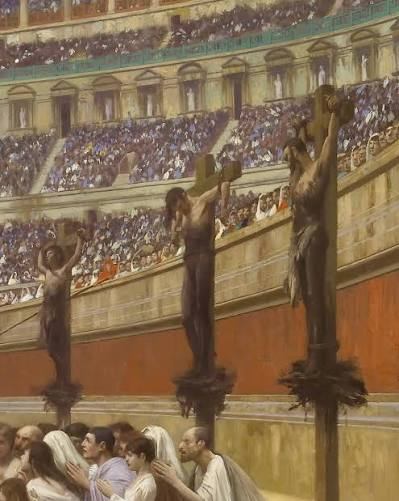
The last day of June is dedicated to the First Martyrs of the City of Rome. It is a minor memorial following the solemnity of the martyrdom of Sts Peter and Paul, and easily overlooked. We know about them from the great Roman Historian Tacitus (56-120AD), who was a child at the time of their martyrdom. This is the background. The emperor Nero, a populist and moral degenerate was believed by the people to have caused the hugely disastrous great fire of Rome (64AD) in order to build himself a “Golden Palace”. He tried to calm public outrage by organising vast displays of piety to the gods and lavished bribes all round, but popular anger was not quelled. Then he fixed the blame on the Christians, a small new sect. Tacitus writes: “Accordingly, an arrest was first made of all who pleaded guilty; then, upon their information, an immense multitude was convicted, not so much of the crime of firing the city, as of hatred against mankind (he uses the latin phrase, ‘odium humanae generis’). Mockery of every sort was added to their deaths. Covered with the skins of beasts, they were torn by dogs and perished, or were nailed to crosses, or covered in tar and set alight to serve as a nightly illumination, when daylight had expired.” All of these spectacles were staged in the Circus of Nero which Nero had built on the Vatican Hill outside the city walls. The climax of these cruel shows was the mockery of the crucifixion of Christ: according to a second-century tradition, the Christian leader Peter was crucified upside down. He was buried on the same hill. Now it is occupied by the Vatican City. It is interesting that Tacitus is one of the first non-christian writers to mention Jesus. In the same passage he wrote: “Christus, from whom the name (Christian) had its origin, suffered the extreme penalty during the reign of Tiberius at the hands of one of our procurators, Pontius Pilate”. He tells us that the “Christians were hated for their "abominations”, and were “a most mischievous superstition”. He was obviously no admirer of Christianity. And he adds that “in Rome, all things hideous and shameful from every part of the world find their center and become popular”. He counted Christianity among these. St John, writing about the same time in Revelations, refers to Rome as “the famous prostitute, the mother all the filthy practices of the earth” . Satan was very much in control there, and it is no wonder that the populance were easily persuaded to hate Christianity. Their emperor publicly condemned for “odium”, the Church, God’s very life-force by which he “so loved the world that he sent his only Son” and the Holy Spirit so that humanity might be saved. It is an old trick of Satan to call white black, and it does not work. St Clement I, who was Pope between 88 and 97AD, who also bears witness to the martyrdom of St Peter, tells us that the witness of the faith, courage and calmness of those first martyrs softened the hearts of people and a new appreciation of Christ began to spread
In Hopeful Catholics Ministry we publish articles on this website exploring the increase in numbers of people looking seriously to the Catholic Church which many are joining. It is a great paradox in our age that we have such spectacular developments in the sciences with vast potential for benefiting humanity, yet these very developments are shaking the basics of society itself. One example of this is the difficulty young people experience in finding employment appropriate to their qualifications, because Artificial Intelligence is taking over those activities. This is making it difficult for them to start families. Many of them are drifting. Pope Leo points to this in his recent highly important Encyclical, Magnifica Humanitas. (We quote him in the article, Young People Today .) This is only one of the stresses in our society today. There are many others like the Godless human pride which has producing a culture where the old vices of greed and insensitivity are rampant, while at the same time ways of monopolising wealth and developing weapons of mass destruction are racing ahead. These are not the first times of massive change bringing distress. It happened long ago when hunter-gatherers became restricted by land being converted to agriculture, also when the great swathes of tribes from the east like the Anglo Saxons, Franks and Germans descended on the Roman Empire. More recently it occurred with the industrial revolution, when people left the land and gathered in massive urban sprawls. All of this is part of the human race developing which God intends , even though for many it has brought great hardship. But his Holy Spirit broods over each development as he did over the chaos at the beginning of creation. Ultimately each development has been a way for humanity to progress. And that progress is designed by God to provide seed-ground for the Church to form humanity more and more after the pattern of Christ. Does that statement seem facile in the face of all the wrong which is coming up to meet us? We need to look deeply into the signs of the times. Why do you think the Holy Spirit, in the Vatican Council, inspired such huge changes in the Church before all the recent alarming developments became apparent? Was he preparing his people to meet and sanctify the modern age? Why is there a renewed turning to God and his Church in today’s young people? Did he plan that they would see through the hollow materialism of their parents' generation? Then again, why is the media increasingly mentioning the Pope and the Church, when they were recently so determined to dismiss them as irrelevant? Is it not possible that God who alone is in charge of human history is doing something special in our age? On this website, we publish articles seeking to illustrate what God is doing, as he is energetically working through and in his Church, shaping the foundations of a new and great age of world-wide Christianity. The Church is his programme for drawing the human race into the life of the Trinity.

Fr Brian writes: This is a particularly difficult time for young people. Unemployment and limited life chances threaten their very mental health. Pope Leo spotlights these problems in the new Encyclical, Magnifica Humanitas . I quote him here. The numbers are those of paragraphs in the encyclical. "167. For young people, job insecurity is particularly devastating. As the Bishops of the United States of America have recalled, work is not merely a source of income but a crucial sphere in which identity is formed, friendships and relationships are forged, practical responsibilities are learned and one’s vocation is discerned. When access to work is hindered by high levels of unemployment, inadequate systems of training or structural barriers, many young people find the path to their human and professional fulfilment blocked. 151. St John Paul II recognized that unemployment is a grave evil. Indeed, when it reaches massive proportions, it becomes a true social calamity that especially requires the State to exercise responsibility. In some contexts, there is a legitimate fear of a significant and rapid contraction in available jobs that would create a chain reaction deeply impacting families, young people and local economies. In many sectors, this can already be seen in new forms of job insecurity and inequality, characterized by outsized remuneration for a highly specialized minority alongside declining wages for a large portion of the workforce. 152. It is certainly desirable for technology to relieve humans of arduous, repetitive or dangerous tasks and to provide intelligent support for human activity. Yet, the protection of employment opportunities and the irreplaceable role of the individual must remain the general rule. The pursuit of greater profits cannot justify choices that systematically sacrifice jobs, because the human person is an end, not a means, and the economic order must remain subordinate to human dignity and the common good." Fr Brian writes: A consequence of job insecurity is that young people are finding difficulty in starting families. This is also aggravated by weird cultural and economic theories. Governments often actively marginalise family life. Pope Leo writes about the family. "165. The family is a primary social good. Founded on the enduring union between a man and a woman, it is the first environment in which all persons develop their potential, become aware of their dignity and learn the earliest forms of truth and goodness, internalizing the habits that prepare them for life in society. As the first natural society, endowed with foundational rights, the family is the fundamental and irreplaceable cell of every community organization. Consequently, when political projects and major economic decisions relegate the family to a marginal or secondary role, the authentic growth of the entire social body is compromised."
New Book: A message for its own time
Written for Catholics and fellow Christians seeking a vision of the Church which inspires great hope in these challenging times.
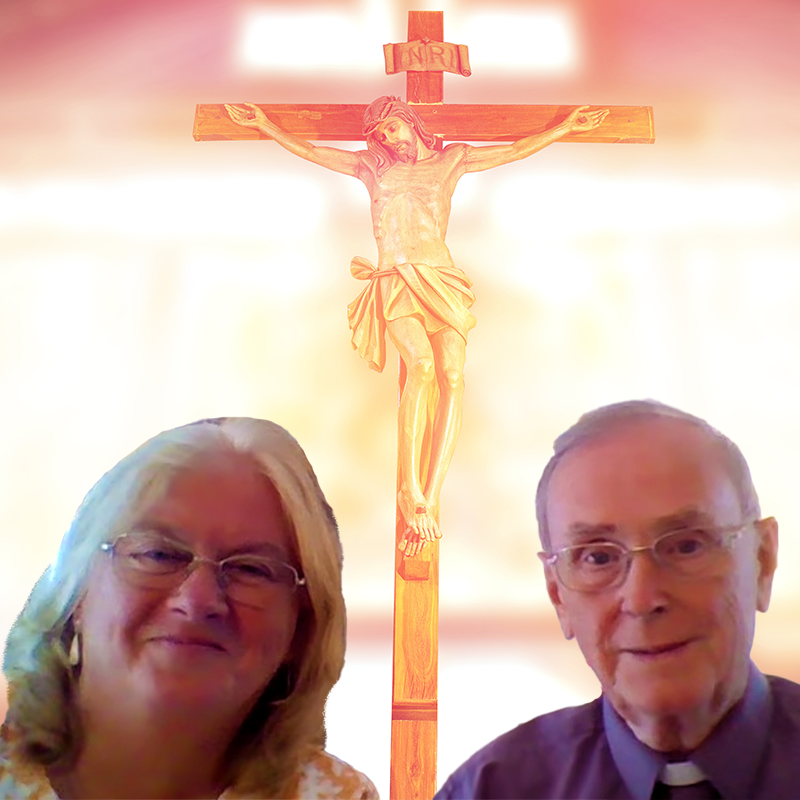
Meet the Founders
The Hopeful Catholics website is a mission based upon the recent writings of Fr. Brian Murphy and Anne Bardell

Articles of faith
Inspiring writings to assist the faithful whiilst discovering purpose.