By Fr. Brian Murphy August 20, 2024
Our book is called ‘ A Message For Its Own Time’ (AMOT). In Chapters 9 & 10 of our book, A Message for its Own Time , I attempted to give a description of Contemplation, or the Prayer of the Heart and how it effects our spiritual and personal development and that of the whole world. I thought it might help if I gave an outline of how I have experienced its development in my own life. I have been a priest for 57 years. I have been praying official Church prayers since I started in seminary at the age of 11, so I have been steeped in it. I have also prayed privately and there I expect my prayer has been largely like everyone else’s. It is only since I retired from parish work that I have found time to think more deeply about the heart of prayer and to allow my understandings to come together. It is taking a long time and awareness only comes through actually practicing contemplation. I do not set myself up as an expert, and I am certain that much of what I will write will be inadequate as a serious treatment of the enormous reality of the praying heart, but I offer my thought and experiences as one pilgrim speaking to another, and hope that you will give me your thoughts so that we can learn and grow together. We need to see the journey of contemplating our Father as something normal for Christians and become used to humbly sharing our experience of it. It is a basic necessity of our Christian life. I call this series of chapters about contemplation a stream of thought , because I hope it we will develop it together as we explore and experience this prayer of love. The Glory be Things took a surprising new turn for me with the Glory Be to the Father prayer. You know: "Glory be to the Father, and to the Son, and to the Holy Spirit, as it was in the beginning is now and ever shall be world without end. Amen" We say this prayer a lot. It is at the end of each decade of the Rosary, and it is constantly repeated in the Office, the official prayer of the Church that Priests are instructed to pray daily. That is made up of set Morning, Evening and Night Prayer, as well as Mid-day Prayer and a section called the Office of Readings. I have to confess that my saying of the Office has been ragged. This is partly because the other duties of a Parish Priest have increased so much, and also because I have the habit of stopping and meditating on bits of it when I am struck by a thought. Since I retired from parish work, I have found more time for the Office. The biggest element in the Office is reciting parts of the Psalms. Each part of a Psalm ends with the Glory be to the Father . A few years ago, I found myself being stuck on this prayer. It was like I couldn’t get past it. It seemed as though the Trinity was demanding my attention - knocking on my door. I did some reading to find out what was going on, and I turned to a book about St Elizabeth of the Trinity, a Carmelite nun who died in 1906 aged 26. She was gifted with a profound understanding of the Holy Trinity. Reading some of her thoughts deepened my awareness that the whole of reality is rooted in the indescribably loving unity of the Three Persons in one God. Because it is hard to put into words the reality of the Trinity, we can see it as only remotely connected to the reality we experience every day, but that is like trying to walk without the earth being beneath our feet – it doesn’t work. We are only really alive when we ‘live and move and have our being’ inside the Trinity (Acts 17: 28). The loving family of the Trinity is the real world. All other worlds were created because that family of infinite joy and unity wants to share. We human beings are fondly created by God so that we particularly can live inside that family. But something happened early in human history where we chose to love ourselves more than God - the Original Sin. We all inherit this brokenness within. It is a self-inflicted blindness that makes the things of God obscure. Yet all through history that lost harmony haunts us and human beings have yearned to see the face of God. Contemplation is the simple seeking for the Face of God through love. All religions have tried to achieve this, but they get lost because only God can show us the way. Praise his great goodness! The Son from within the Trinity has becoming human and he shows us the way - he is the way. To contemplate is to know consciously the ‘great light’ which Isaiah prophesied would shine upon ‘the people who walked in darkness’ (Isaiah 9: 2). But how do you do this consciously?
By Webmaster August 19, 2024
The Cloud of Unknowing At the end of chapter 1, I posed the question of how we can consciously "live and move and have our being" within the Trinity. I can’t say that I found the answer to this question swiftly; it was similar to how cyclists gradually move forward by turning the peddles of a bike. In fact, I can’t chart the course of this growing awareness; I was just led to read The Cloud of Unknowing written by an anonymous mediaeval English writer. He wrote: ‘God’s grace restores our souls and teaches us how to comprehend him (God) through love. He is incomprehensible to the intellect. Even angels know him by loving him. Nobody’s mind is powerful enough to grasp who God is. We can only know him by experiencing his love’. So we cannot experience God by knowing things about him. There is a great difference between knowing about a person and knowing them personally. When I know someone personally, a different dynamic takes place to just knowing facts about them. They affect me and I affect them. At our deepest level we long to move from estrangement to loving people. Maybe we keep most people we know at a distance, but as Christians, we are called to love everyone. In fact the first commandment is that we love God first. The second is to love our neighbour as our self. Can I say that I love God? What the writer of The Cloud of Unknowing points out is that we have to come humbly before God, and that we have to downplay our feelings and our ideas, and just enter the cloud of unknowing. It's hard to set aside emotions and thoughts and images which can never grasp God, and just long for God’. But I tried to do this. What helped me was some advice I had from a priest friend who recommended I read Open Heart Open Mind , by Thomas Keating, which is really helpful. Open Heart Open Mind Following Keating’s advice, I began to just sit before God, just seeking a loving encounter on a deeper level than thoughts, feelings and images. I just sought to experience God’s love. The apparent result was a stream of a thousand distractions. I say apparent, because with time I realised that something was happening deep within me. I wasn’t acquiring knowledge of God. I was acquiring knowing . It wasn’t ideas or feelings, but a sense of God within me and an underlying knowing of his love. Occasionally, I was lost in it for a few seconds. I was encouraged to persevere because I heard Jesus asking me hundreds of times “do you love me?” That kept me focusing on seeking the loving relationship, which he wants so dearly to form with me. In this way, I am building a practice of contemplation, even though many people would think I am mainly swimming in a sea of distractions. Our spirits It's like how we learnt to swim. We had to forget our notions of standing and moving on dry land, and acquire the very different skills of moving in water. Deep inside we had that capacity, but we had to launce ourselves into the new world of water. Likewise, each of us has the capacity to know God in our spirit, which is the deepest part of our being, deeper than our feelings and our intellects. Our feelings are notoriously changeable. Also we can lose our minds, but the core of our person, our spirit, can never die. Original sin has weakened it but Jesus has sent the Holy Spirit to awaken our spirits. That means you and me. But to swim in the love of God we have to wade into the water of the Spirit. The danger of intellectualism Please don't think that, because I am a priest, I must have a higher sensitivity to the Holy Spirit - more than you do. In fact priests run the danger of intellectualism. We can be stuck in the mind which is never satisfactory. Jesus blessed the Father "because you have hidden these things from the learned and the clever and revealed them to mere children " (Matthew 12; 25). Clergy can resist becoming little children. It is only when I come to you as a little brother that we can be in a position to learn together the wonders of God. Do you experience contemplation sometimes, or regularly? Do you find yourself quietly resting in God's love, and have never really thought about it? I am convinced that Jesus wishes us to develop this heart-to-heart with God until we are praying always as he tells us to. I am trying to open up this conversation about what I am learning. Can you share what you are finding? Don't get embarrassed because you don't know much. Let's be like some beggars discussing how to locate the best meal.
By Fr Brian Murphy August 18, 2024
As time has gone on, another development took place in my prayer of contemplation. I don’t know how it happened; it was like an itch that needed scratching, but something made me sense that I am loved by our Father . I know now that it was Jesus who was teaching me. Over the years, I have normally prayed to Jesus and, more vaguely, to God. I have known the work of the Holy Spirit, sometimes in striking ways, but I had really not known the Father’s love – I just knew about it in my head. But it was dawning on me gradually that all divine love comes from our Father. Jesus was shining a light on this in my spirit. It is different to praying to Jesus. With him I talk and listen and worship, but that is a very human experience. With the Father it was more of a knowing through unknowing. Does that sound strange? All I know about God is nothing compared to knowing him. When Jesus was transfigured in glory on the mountain top talking to Moses and Elijah, St Peter wanted to build three shelters for them, because he was hoping to just say there. But the Cloud of the Father's Presence came down and the apostles fell on the ground in awed worship. (Matthew 17: 1-6) I am not surprised that the presence of the Father is often described in the Bible as a ‘cloud’. But it is a cloud which reaches down to the very depths of our being. It defies words, and comes and goes into our consciousness as it wills. Under its influence, we develop a subconscious attitude of receiving love . The attitude of receiving love We only sporadically realise that we have this attitude inside us. It seems to me that the main way to facilitate its growth is to actively give time to contemplation. Great saints seem to reach the stage where this attitude becomes the continual focus of their minds and hearts. It is perfectly right to want to be like them, which we will with time. But be content with how the Father leads you in his own good time. Let the desire grow, but avoid impatience! Centering prayer Thomas Keating calls Contemplation ‘Centering Prayer’. He advises beginners to just keep repeating a word or a phrase and leave all other notions to fade away. I myself have been led to just keep repeating the word ‘Father’. As we persevere, over time, we will become increasingly aware of this attitude of receiving God's love growing in our souls. It does come and go. We will sometimes find that we doubts its existence. Then we have to cling to the belief that it is there. Human lovers find love strengthens as they overcome their doubts. That is how love sends down deeper roots. Contemplatives are like athletes who, through practicing, develop and train their muscles. Doing the same exercise again and again can be a tedious slog, but we get into a rhythm and find we miss it when we don't do it. After all, it is simply going to our Father for love. Keep it up! Jesus said: "when you pray, go to your private room and, when you have shut your door, pray to your Father who is in that secret place, and your Father who sees all that is done in secret will reward you" (Matthew 6:6). How are you finding these thoughts of mine? Any questions you would like to ask? Any thought you would like to offer? If we share, we will grow. We will be led by God. Jesus tells us that when two or three share in his name, he is with us. Let's share in his name!
By Fr Brian Murphy August 17, 2024
In Chapter 3, I described how I am becoming increasingly aware of the presence of Our Father. As the Spirit was making me more aware of the Father, I began to understand that I was actually joining in the conversation which Jesus himself continually has with the Father. In fact I now try to begin contemplation by entering into the presence of Jesus and becoming aware that he is inviting me to take my place in his prayer to the Father. Jesus' own prayer to the Father Jesus always found time to go away to a quiet place to converse with his Father. What took place in those time of prayer is a deep mystery. We have some insights into it, like his Priestly Prayer at the last supper (John Chapter 17), and his prayer in the Garden of Gethsemane (Matthew 26: 36-46). Jesus' prayer is profoundly human, but his is a humanity maturing with extraordinary speed as it is impregnated by his identity as the Second Person of the Trinity. Therein lies deep mystery! I am like a little brother doing what the apostles failed to do in Gethsemane - staying awake, watching and praying. Just as on that occasion he needed their involvement, now he needs mine, meagre as it is. I am a unique part of his mystical body with my own song to sing and prayer to make. But it is only authentic when it is his prayer as well. And, surprisingly, my small part in his prayer is essential for the whole process of transfiguring the world into the glory of God. Through Christ our Lord. Amen. We usually end our prayers with the phrase ‘through Christ our Lord. Amen’. For years, I have known theoretically that all our prayers are through Jesus, but the words were just a routine to me. Now I am beginning to experience that I am really praying in him and with him. It is real. He is the channel of all prayer to the Father. Or, rather, all prayer to the Father is his; we are privileged because he invites us to take part in his prayer. Even non-Christians who pray to God are doing it unwittingly through Christ. Meditation and contemplation are different but complementary. Contemplating does not stop me meditating. Meditation is where I ponder in my intellect and feelings about the things of God. Faith always seeks to understand. I find myself agreeing with St Paul when he says: "All I want is to know Christ and the power of his resurrection" (Philippians 3: 10). But meditation is the prayer of the mind, and it should lead us to the prayer of the heart - the prayer of contemplating our Father with Jesus in love. We are told twice by St Luke that Mary "pondered things in her heart" (Luke 2: 19). When she was doing that, she was allowing herself to grasp and be filled with wonder as the loving plan of the Father unfolded. The Holy Spirit was leading her mind and heart and spirit into the utter fullness of God's light. One day, in heaven, each of us will be filled with the "utter fullness of God" (Ephesians 3: 19). Scripture I find studying the scriptures a most effective tool for meditation. Scripture is the Word of God, through which the Son of God speaks to us. It is ‘alive and active’ (Hebrews 4, 12), and, through it, Jesus is present and speaking individually in our minds and hearts. A good way to study scripture is to start with each day’s readings at Mass , and asking Jesus to explain the scriptures to us. He will guide your thoughts to deep meanings. You can find the daily Mass Readings on this website: Go to 'Our Mission' and press the 'Today's Word' button. There are other great ways to use the Scriptures, which we will recommend on other pages of this website. We contemplate with our spirits Although contemplation and meditation are complimentary, the Knowing which comes through contemplation is deeper than prayer on the intellectual and emotional level. It is an activity of the far deepest human self, our spirit. Our intellect can be feeble a lot of the time, and our feelings can be wayward, but when our spirits are joined to the Holy Spirit of God, there is within us a continual conversation through Jesus with the Father, even though we may not be aware of it for much of the time. St Paul says ‘The Spirit too comes to help us in our weakness. For when we cannot choose words in order to pray properly, the Spirit himself expresses our plea in a way that could never be put into words’ (Romans 8: 27). Elsewhere in the same chapter, he says ‘the spirit of sons... makes us cry out, "Abba, Father!’ (Romans 8: 15). 'Abba' is the Hebrew word for 'Daddy'. All this activity of the Spirit is going on deep in the Christian's soul. Contemplation is where we deliberately go into that private place within, and seek the face or our Abba. It enables the Holy Spirit's prayer to break to the surface of our mind and feelings as we live our everyday lives. This might last minutes or hours or days – perhaps longer; I know it lasted longer for the great saints, but I am not on their level – yet. Have you ever thought that your prayer is in fact your personal share of the prayer of Jesus? It's a wonderful thing. Through baptism, I am really and truly incorporated into the risen Lord. And I don't have to do anything to make that present. I just have to relax enough to let the deep awareness of the special Jesus prayer within me well up and build until I am full of him. What do you think?
By Fr. Brian Murphy August 15, 2024
I experience two types of restlessness of heart, and often confuse them. Normal restlessness The first is caused by my own insecurity which causes me to seek signs of hope in the world around. That either leads to fixating on things that inspire me superficially while avoiding the rest of reality (like following my football team). I see this happening in others, especially in social media where questionable ideas gain massive ‘likes’. Or I find myself determinedly studying the news for signs of hope. But that can lead to exhaustion and disenchantment, sometimes downright pessimism about the world. I think I see signs of these symptoms in many other people I know and hear about. So many people today stress how instable the world is. Of course these feelings can come from something peptic in my body, but that is easy to spot with a bit of self-diagnosis. Spiritual restlessness The second form of restlessness of heart that I experience is the thirst for God. Sometimes I feel like the woman searching for her lover in the Song of Songs – no peace until I rest in God. This urgency is far from permanent. Sometimes I just have a calm seeking of his face in contemplation, at other times there is a blank and I have to make myself seek his face. I wish I had the urgency of a lover all the time, but as I seek God’s face in contemplation this fervour is becoming a bit more frequent. When I study the saints, though, I am aware that it is not right to only want this fervour to be permanent. They are gradually led to seek a share in the love of Christ which causes Jesus intense suffering until all are saved. In chapter 4 above, I quoted what St Paul wrote in Philippians 3: 10. He says ‘All I want is to know Christ and the power of his resurrection’ ; what I did not quote is the rest of what he says in that verse: ‘and to share his sufferings by reproducing the pattern of his death’. Here I hesitate. I think that I am going to have to go round and round a lot of times to reach that generous attitude. I am sure that Jesus wants to lead us deeply into letting his love so burn in our hearts that we are not daunted by the prospect of pain, but are increasingly eager to pay any price for the healing of humanity. I have come across people who have shone with light and joy in the midst of horrendous suffering. They have been graced with love far greater than mine. I think they are examples of what the Holy Spirit can do in willing souls. All I know is that I can be like that, but it seems to be a slow development. There seems to be so much brokenness in me that Jesus wants to heal first. Jesus says in the Beatitudes ‘blessed are the pure in heart they shall see God’ (Matthew 5: 8). My heart needs much purifying until I am transfigured by Christ’s love. The battery that charges the Church Forgetting myself now, I have throughout my priestly life visited and taken Communion to hundreds of sick and housebound people. It still causes me awe how the vast majority bore great suffering in deep faith and trust. In our ministry, Anne and I have always believed that the main battery that charges the parish is the prayer of these people and the elderly. Do you suffer and feel all is a waste of time and useless? Or has our loving Lord inspired you with a sense that it is all being used to lift the world into the goodness of his Kingdom? Don't let your suffering be wasted. I know people with no faith often suffer with great stoicism, but that takes a great effort and is characterised by pessimism. Christian, you are being invited to have a special ministry in the Royal Priesthood of the baptised! Let us not forget the cosmic nature of the prayer of Jesus that we share in. In the wonderful Chapter 8 of his letter to the Romans, St Paul tells us: "The whole creation is eagerly waiting for God to reveal his sons (and daughters)... creation still retains the hope of being freed, like us, from its slavery to decadence, to enjoy the same freedom and glory as the children of God. From the beginning till now the entire creation, as we know, has been groaning in one great act of giving birth" (Romans 8: 19-22). Later in the same chapter, he writes: "all things work together for the good for those who love Him" (Romans 8: 28). Every bit of sacrifice that is offered by the faithful is part of the coming to birth of the new creation. If you are like me, you will be praying that God will send the courage and generosity we need, should he send suffering our way. As for the prayer of saints like St Paul, who actively prayed to share in the suffering of Christ, we must hope that, should Jesus call us to that heroic love, we will accept his call with grace. This topic is huge. Have you any comments or queries about it? Use the "Comment on this article" button below.
By Fr Brian Murphy August 14, 2024
Fr Brian continues his sharing on the Prayer of the Heart
By Fr. Brian Murphy August 14, 2024
In the previous chapter, I called St Bernadette a ‘great soul’. She did not start off like that, she just fulfilled her potential to an outstanding degree in this world. People like that get noticed because God spotlights them for our encouragement and example. But every person is created with the potential to be a great soul. That is our calling and destiny. We call people like Bernadette ‘Saint’. That is a category given by the Church to call us to attend to them, imitate them, and pray for their help in our own struggles. This only happens after the Church’s careful examination of their lives and much prayer by many people. But, from the beginning, the early Christians called each other ‘saints’. It simply meant ’holy’ which people become at baptism. It is not a description of what we have achieved, but what we have received. Although the whole world is sustained by the Holy Spirit, we are ‘Temples of the Holy Spirit’ (1 Corinthians 6: 19), and in us is focused the life of God. Pope St Leo the Great exclaimed: “Oh Christians, be aware of your dignity!” I readily proclaim the dignity of the ‘Saints’, but am slow to recognise that I also am holy, elected to be intimately and intensely involved in the glorious process of renewing the face of the earth, and ushering in the Kingdom of our Father. Dear reader, are you the same? We too are saints! The prophet Ezekiel had a vision of a valley littered with dry bones. He is commanded to speak the word of God over them several times. First they rattled together into skeletons, then flesh grew on the bones, then skin, and finally they come to life. The prophet is commanded to prophecy: ‘This is what the Sovereign Lord says: My people, I am going to open your graves and bring you up from them; I will bring you back to the land of Israel. Then you, my people, will know that I am the Lord when I open your graves and bring you up from them. I will put my Spirit in you and you will live, and I will settle you in your own land’ (Ezekiel 37: 12-14). We Christians have been taught the full meaning of the term, ‘Land of Israel’: it is life inside the Trinity from which we have been exiled by sin. Gradually, and increasingly our Father is leading humanity back to live in his Family. That means beginning eternal life here and now. What a dignity it is to be part of the great renewal! It is our Father's will that we and all creation reach our full potential. It is exactly what St Paul prays for in Ephesians 3 :13-21: " This, then, is what I pray, kneeling before the Father, from whom every family, whether spiritual or natural, takes its name: Out of his infinite glory, may he give you the power through his Spirit for your hidden self to grow strong, so that Christ may live in your hearts through faith, and then, planted in love and built on love, you will with all the saints have strength to grasp the breadth and the length, the height and the depth; until, knowing the love of Christ, which is beyond all knowledge, you are filled with the utter fullness of God. Glory be to him whose power, working in us, can do infinitely more than we can ask or imagine. glory be to him from generation to generation in the Church and in Christ Jesus for ever and ever. Amen." What an unimaginably glorious destiny we have been given! We are god's holy people by gift. Let’s all keep growing! Are you really a saint? Comments? 
By Fr Brian Murphy August 13, 2024
I have read in the writings of Saints Theresa of Avila and John of the Cross about the ‘Dark night of the Senses’, and the ‘Dark night of the Soul’. I don’t want to talk here about the ‘Dark Night of the Soul’ The ‘Dark Night of the Senses’ is where people walking the path of contemplation experience a dissatisfaction and boredom with sensual gratification; things that once seemed vital for our comfort and well-being may seem boring, even pointless. This experience is disorientating; we can even think we are becoming depressed. I believe I am experiencing this at the moment. Depression has a multitude of causes, which I don’t pretend to be an expert in, but I have noticed in people that it is often where a new growth is laboriously taking place. Many people who have had ‘a breakdown’ really came to a stop because the way they were living was inadequate, and a new and more enhancing state of life was urgent to develop within them. So depression and breakdown are not necessarily destructive. They can in fact be breakthroughs. The Dark Night of the Senses is where the desire for God is battling for first place with the desire for the good things that God has given us. One hymn puts it like this: “The things of earth will grow strangely dim in the light of his glory and grace” (Cast your eyes upon Jesus: Hillsong). I have enjoyed many things in life, and much of my sense of feeling OK is caused by what I believe is a healthy balance of work and play, but mostly that balancing act happens in a part of myself which has little consciousness of God. But, once the divine lover gets under your skin, other ‘likes’ seem less attractive. Then the enjoyment of sensual things experience a ‘dark night’, but, really, the deepest desire of my heart, my longing for the Father, is claiming its rightful first place. It is important to state that this dark night gives way to more light. In my readings about the spiritual Dark Nights of the Senses and the Soul, it always seemed to me that they were long periods of discomfort and even suffering, and maybe for some people they are, but I think it comes to me in bits - sometimes more powerful, sometimes less. I don’t think I am depressed, but that love is being matured within me. I have prayed to love the Lord God above all else, and I think that he is answering my prayer. This awakening of my innermost self is purely under the caress of his hand; it is his gift, but it is a bit disorientating. I know that it will all work out well, though, because God is love, and I want to be filled with love. I also believe that he will gradually lead me to enjoy the things of the world shot through with his presence. I expect that that will entail a gradual adjustment of what I think I need and don’t need. I think I will become content with less, and appreciate the ‘less’ more. We’ll see. Spiritual writers keep talking about using our wills . This faculty seems of extreme importance in growing spiritually. Sometimes I have to cling on wilfully when I have doubts or lose a sense of consolation; sometimes I have to cling for a long time. That is when I am working with God on my own development. I have to say that, whenever I will myself to cling to God in darkness, there is a developing inner appreciation that this is the right course of action. I suppose that is the gift of faith at work. It is not a feeling but an increasing conviction. Don’t get the impression that this is all a smooth progression inside me. It is full of bumps and wrong turns, and attempts to turn back. But he loves me and does not give up on me, no matter how many headaches I give him and myself. I repeat: It is important to state that this dark night gives way to more light. People today have gadgets which count their steps. If you had one that gave you the sum total of all the choices you have made in your life, you would be looking at millions, possibly billions. At all times we are convinced we are making the right choices, the consequences of which will be ups or downs. There are far less downs when we choose to make the journey into the family life of God. Also the ups well up inside us, and become a living stream to nourish ourselves and the world. Any thoughts? Please share!
By Fr. Brian Murphy August 11, 2024
I said in the last chapter that I want to be full of love. Let me tell you about somebody who was. This is true. Val was one of the youngsters who used to chat at the front door of the presbytery with another priest. I saw her sometimes at Mass as well as her family. Time moved on and we found that she was having a baby and a marriage was quickly arranged. I think it was in the Registry Office. That’s how things happened forty odd years ago. Then we heard that soon after the birth she was diagnosed with an aggressive cancer. They could do nothing for her. She came back for her last days to her parents’ home. That is when I got to know her. I took her communion and we chatted a lot. I remember that she was very peaceful and never blamed God. She had a serenity about her fate. And she was more interested in others than in herself. One Sunday morning, her brother came to tell the parish priest and myself that they thought she only had a few hours to live. After the last morning Mass, I went to see her. They left me alone with her in the front room; she lay on a bed under the window. I held her hand and we were quiet. Then she surprised me by saying; “I love you, Father. I love everybody”. After a while she said: “I can’t feel my legs”, then a little later she couldn’t feel most of her body. I just held her hand. Then a surprised look came on her face. She was looking intently at the corner of the room and she said: “Why has he come for me?” Her face was radiant, and I knew she was looking at Jesus. I think she said: “I’m not worthy, why has he come for me?” I just mumbled something innocuous. Soon I had to go and get my dinner and lead a Holy Hour at 2.30 p.m. During the Holy Hour, all the people were praying for Val. She had become a focus of special prayer over the last few months in the parish. I had a sudden vision of Val lying on her bed, and I saw her soul lifting out of her body and going up towards the light. I looked at my watch and it was 3 o’clock. After the service, I went to their house, and her father told me that she had died at 3 o’clock. There was a wonderful peace in and around their house until after the funeral. People remarked about how they had gone to mourn and had instead experienced a sense of peace and goodness. I did her funeral, and often visited her grave when I was in that cemetery. A young, ordinary woman, who, in the long quiet hours of her illness, was given the gift of loving the Lord – it was special, yet it was somehow ordinary. She became quietly and gradually a contemplative in an ordinary home. By the time of her death she was in love with God and everyone. If she could cooperate with grace like that, so can we all. There really was an atmosphere of peace and blessing around her house until the funeral. Many people remarked on it. When St Francis in later life was helped into a town by his brethren, the atmosphere really became charged with grace. It was testified to many times. In Lourdes, I watch people wrapped in quite stillness. Many come to ask for help, but stay to contemplate. There is that atmosphere of grace, and millions of people go away aware of having been touched deep down. These are the true miracles of Lourdes. Why does this atmosphere not descend everywhere? I think it is because, in those special places and special times, God is giving his soldiers an experience of prayer's effects so that they go back to the battle lines with fresh faith. It is not the moments of felt grace that renew the heart of the world. It is the faithful persistence in prayer and carrying out whatever duty God assigns to us. That is when we take our part in the redemption. What a privilege! More things are wrought by prayer than this world dreams of. It is especially so when the one who prays has no idea what effects of grace are flowing from their prayer. It gives God space to act to change people, a child in hospital relieved, a war taking a different direction towards peace, a struggling soul freed. Often it is the very fact that our faith tells us that there are effects which gives greater power to our prayer. All over the world, praying souls are persevering because of a conviction placed in their hearts by the Holy Spirit that here is a stream of grace. Nothing is wasted in the divine process of drawing the whole world into our Father's hands. Jesus told St Thomas: "Blessed are those who do not see and yet believe" (John 20: 29) Val would never dream of calling herself a great soul. But her life and death produced a moment in time and place when people were nourished and grace was felt. We will never know in this life what blessings have been received as a result of our trustful seeking the face of God. But in the next life we will be shown the complex patterns in the salvation Tapestry our Father is weaving with our help. If you are locked in sickness, weakness or poverty, you are just right for contemplation. It turns all that suffering into grace, and the creation moves towards the freedom of the children of God. Any ideas to share, or queries to suggest?
By Fr. Brian Murphy August 10, 2024
LOVE v WILL POWER For years I have heard spiritual guides saying that it is our wills that are crucial in the prayer of the heart. I have to admit that I have found it difficult to make sense of this, because it sounds like muscular Christianity which I have found inadequate. I imbibed a strong moralising religion as a child, which meant learning what was right and willing myself to do it – this was especially reinforced by the image of a fearsome God who was keeping the score. The result was a sense of failure combined with frequent resolutions to do better. I know that was not true religion, which is about relating to the God who is love. What I was practicing was a throwback to Old Testament keeping of the law. I think that is what Jesus was talking about when he described John the Baptist as the greatest man born of woman, but added ‘yet the least in the kingdom of heaven is greater than he is’ . He said: ‘Since John the Baptist came, up to this present time, the kingdom of heaven has been subjected to violence and the violent are taking it by storm’ . (Matthew 11, 11). Muscular Christianity with its stress on will power uses violence against self and even against others to take the kingdom of heaven by storm. So why do the greatest spiritual guides keep saying that the will is central? A clue lies in The Catechism of the Catholic Church’s chapter on prayer (paragraph 2563). The explanation begins with the heart: “The heart is the dwelling-place where I live. According to the Semitic (Jewish) or Biblical expression, the heart is the place ‘to which I withdraw.’ The heart is our hidden centre, beyond the grasp of our reason and of other people; only the Spirit of God can fathom the human heart and know it fully.” The Catechism’s explanation then shifts the focuses to the heart’s movement and actions beyond itself: “The heart is the place of decision , deeper than our psychic drives. It is the place of truth, where we choose life or death. It is the place of encounter, because as images of God we live through relationship: it is the place of covenant” (my underlining). I find the words ‘decision’ and ‘choose’ more helpful than ‘will’. As I spend time in silent prayer seeking the face of God, with the conscious attempt to love him and let myself be loved by him, it is the constant renewing of the decision and choice which gradually solidifies an attitude of love in my heart. Much of the time, there is no feeling or understanding of this living relationship, but, as time goes on, I am aware that that relationship is an attitude developing in my heart. That awareness rises up from my heart to my mind more and more throughout the day and night. It is like a catch of a tune springing up in the mind. But the word ‘will’ or 'will power' certainly describes the strength needed when there is temptation. I find that it is easier to resist temptation when I am aware of the Father’s love and Jesus’ closeness. It is when these are obscured that my will must operate most strongly. Usually it is not a matter of willing to do something, but rather a tenacious clinging on in the dark to the hand of God. That takes grit, in which I am often lacking, but as the relationship grows I expect my will to grow stronger. WHAT IS THE USE OF TEMPTATION? We might ask: what does temptation have to do with contemplation? Temptation is never far away from one who contemplates. The Evil One knows only too well what power for good flows from the lovers of God. He hates contemplation and tries to disrupt it whenever he can. Thankfully, God shields his lovers much of the time, but at others he permits us to be tempted. It is not that he is abandoning us then, but he is turning the Devils weapons back on his own head. Each time we overcome temptation with the help of God's grace, not only is the Devil weakened, but also our own inner self grows stronger. It is in that struggle, that we are tested and purified like gold in a furnace. When undergoing temptation it is important to remember four basic Catholic teachings. God will never allow us to be tempted beyond our strength. But often we will not appreciate what strength we have with the aid of God's grace until after struggle is over. All temptations eventually pass. Temptation is not sin. Sin is where we willingly indulge a temptation and welcome it into our souls. Then it restricts our capacity to experience God's love. In that state of deprivation we allow evil to become stronger in ourselves and the whole world. Temptations arise from virtues that are wounded and twisted. Anger, for instance, is a God-given power of our soul to remove evil with extraordinary force. When anger is diseased, that force is used to harm and hurt. The saints and spiritual teachers mean something much deeper than 'will power' when they use the word 'will'. We shall consider that in Chapter 12 in this series 'Prayer of the heart'. QUESTION How are you finding my thoughts on the prayer of the heart/contemplation? I am sure I myself only see a small part of this deepest activity of our spirit. Would you care to add something of your own thoughts and experience? Use the 'comment on this article' button below.
By Anne Bardell April 16, 2026
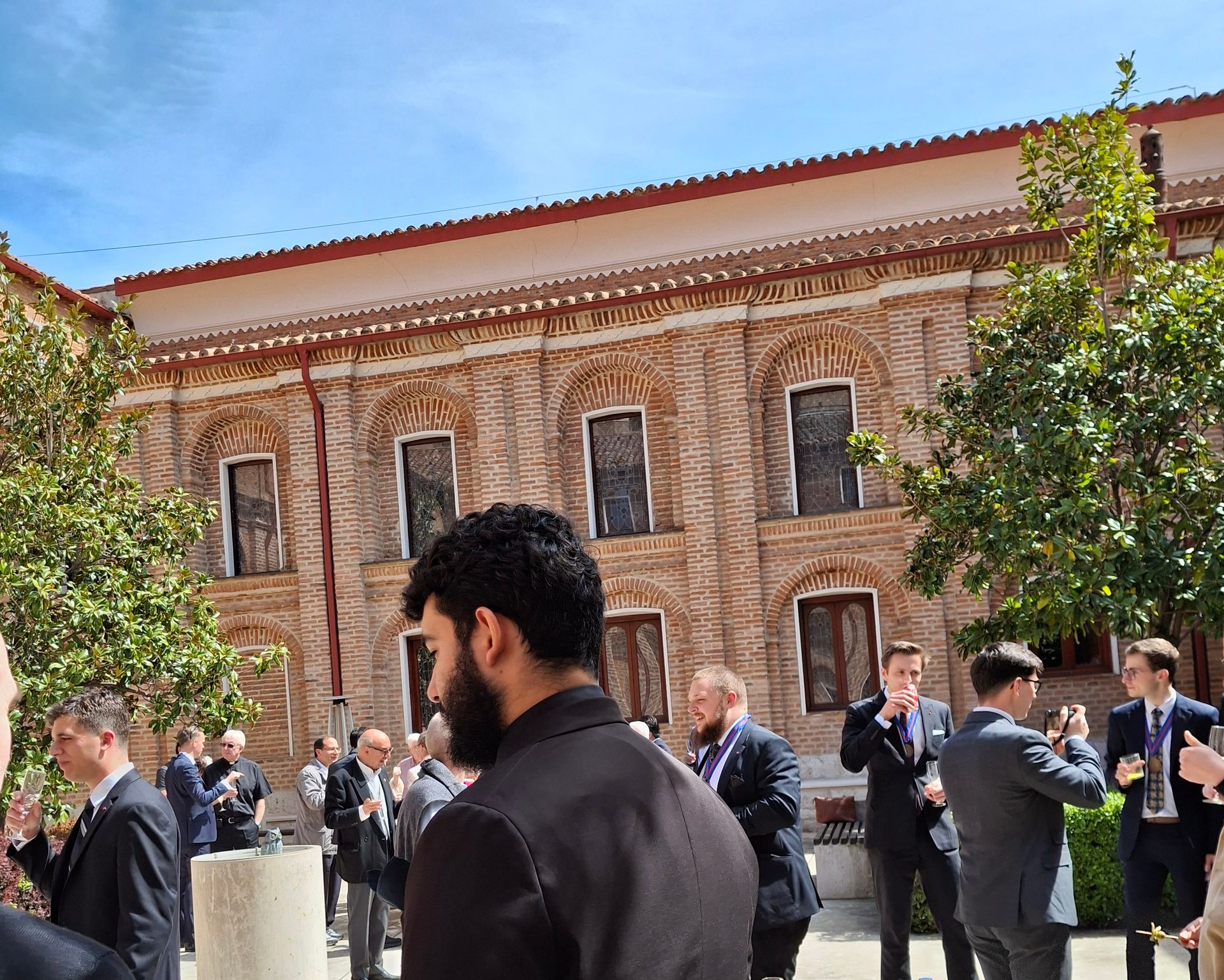
Visiting candidates for the Priesthood from a lay point of view. During Holy Week we had the privilege of staying at the English seminary in Valladolid in Spain. There were 19 lads who were two thirds of their way through the propaedeutic year. This means they were on the 1 st year of preparation and training for the priesthood, which would be followed by 6 years in seminary in Rome at the Venerable English college, Oscott in Birmingham, or Allen Hall in London. It was a real gift to have so many wonderful conversations with them about the course they are following, the thought processes they are led through and their hopes for their future, and the future of the Church. They were men on all different ages – some still very young whilst others had been in business or industry after university. Many were from the UK but there were also four lads from Canada and three from Norway as well as one lad from the Armenian tradition and one from Brazil ( although bnased inth eUK), and other countries were also represented. So, there was a mix of cultures, languages and traditions. It was a joy to hear their views on the progress of the Church around the world and their involvement in it. Their willingness to sit and chat and the warm welcome they gave us was incredible. There were also members of staff present ( four of whom were priests and one lady) as well as some of the families and friends of some of the seminarians. It was interesting to hear of the visiting speakers they have during the year, the visits of some of the bishops of men in the current group, visits to Lourdes and this week they are on the Camino to Santiago de Compostella. Besides this we had the chance to hear from the parents and families who are part of this process as they support their sons. Many were trying to work out what it means for them and their family in the future which gave us a very different perspective. The conversations were at times light-hearted and great fun, but many went on to be very deep and touched on ideas about where the Church had come from and what this generation of young people consider to be the future of the Church. Many of the lads had received great support from friends and family, but several had battled with views of folk who thought they were wasting their life and did not understand the call of God to this vocation. They expressed their thoughts on the archaic processes of past seminaries which many alumni had shared with them over the months. Without any prompting these men stated that they wanted to go to seminary not only to understand their vocation but to receive training to be the best pastors they can be and to learn how to serve God in the best way possible. Although they sometimes seemed young and idealistic their course of thought was true and honest. One of the most significant things I discovered throughout these conversations, both with staff and students was to learn that this propaedeutic year is all about the foundation of prayer in their life. The students are led to develop habits of prayers, to learn how to use the breviary, to discover the meaning of scripture through Lectio Davina, to study the Catechism of the Church and to question themselves about their own relationship with God. This was not just to cover the basis and tick the boxes there was a real desire to listen to God with their hearts. From many conversations with older priests, I came to the conclusion that this often seemed to be missing in seminaries in the past and it was great to hear this is the first thing they tackle and develop in the lives of these young men. Without prayer and a relationship with God at the centre of their lives how can these possible future priests embark on the next stage of their journey? Even if some discover they are not called to the priesthood this foundational year will be a corner stone in their future lives. We manged to attend many of the services and times of prayer in the college and although very nervous the lads got stuck into the things they were asked to do, such as sing the Psalms which many had only done in practise; to read with confidence and to serve on the sanctuary. They did this with great joy and gusto. I am totally sure I would never have attempted singing solo as they did, credit must be given to them, especially if they were slightly tone deaf. Well, done lads!
By Anne Bardell April 16, 2026
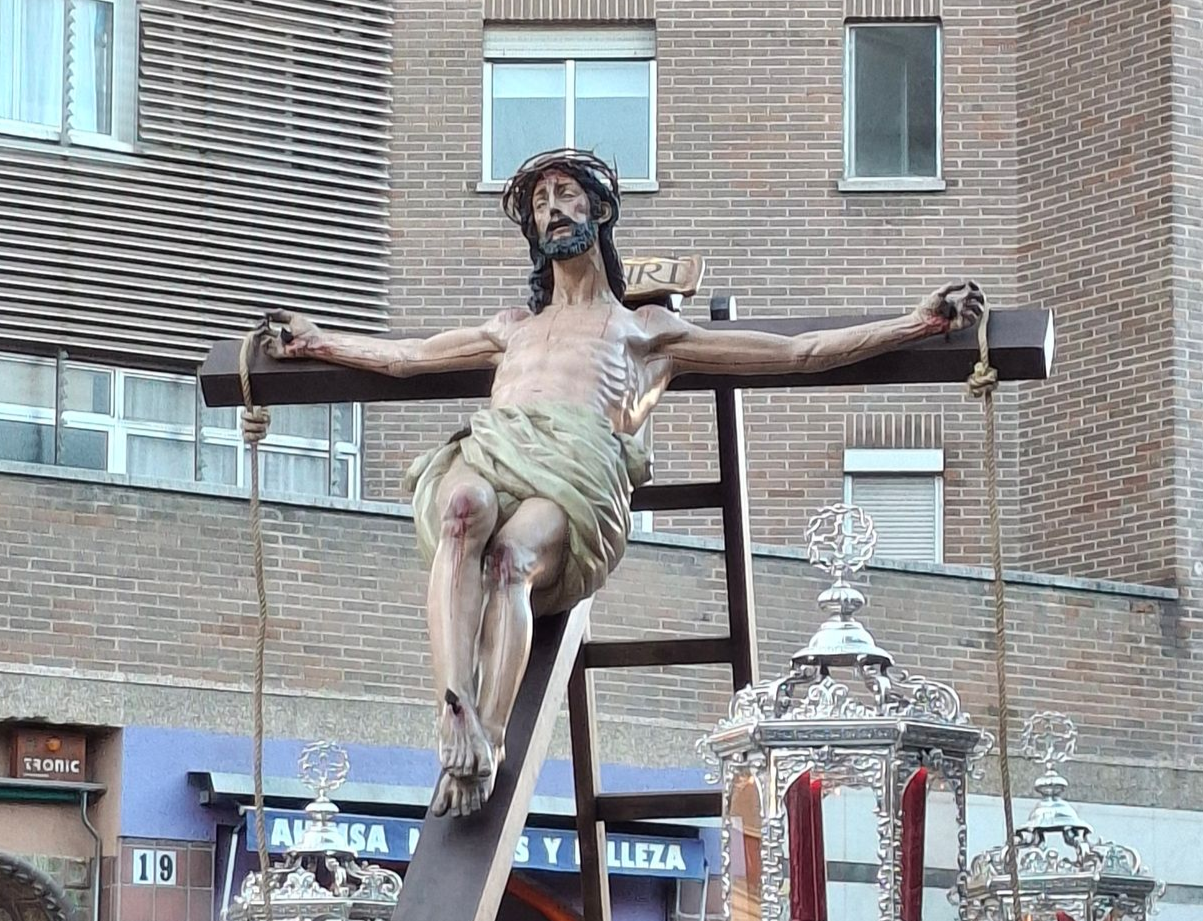
Whist visiting the English College for Seminarians in Valladolid we attended the Triduum services at the college but we were also able to see several of the Semana Santa processions in the wonderful town of Valladolid. It was quite an experience. On Maundy Thursday morning the seminarians were part of the very long procession of clerics in the Chrism Mass at the cathedral. It was an incredible experience for them, to take part in a huge Chrism Mass, as many had never been to this in their own diocese. On Good Friday they led the grand procession of 33 floats depicting the passion and death of Jesus as the drum beat resounded throughout the city. The city had something of a festive air as families strolled around the town meeting up with other family members or friends for coffee or snacks. Yet even though it felt like a holiday, the atmosphere was still quite sombre and low key. It was as though people were aware something immensely important was about to happen. As the days of Holy Week progressed the atmosphere seemed to build. If you are familiar with the Spanish culture, you will know these lovely warm people cannot go two minutes without chatting and yet wherever you went, they were waiting around in silence or talking in low voices. We saw the Confraternities preparing and bands of young musicians, many older teenagers but younger ones too, as they began to line up in silence for the processions to begin at various churches around the city. They began their long slow mournful processions with tableaux of the passion of Christ, often carried (and occasionally wheeled), by members of various brotherhoods, some with their faces covered, others not.
By Fr. Brian Murphy March 31, 2026
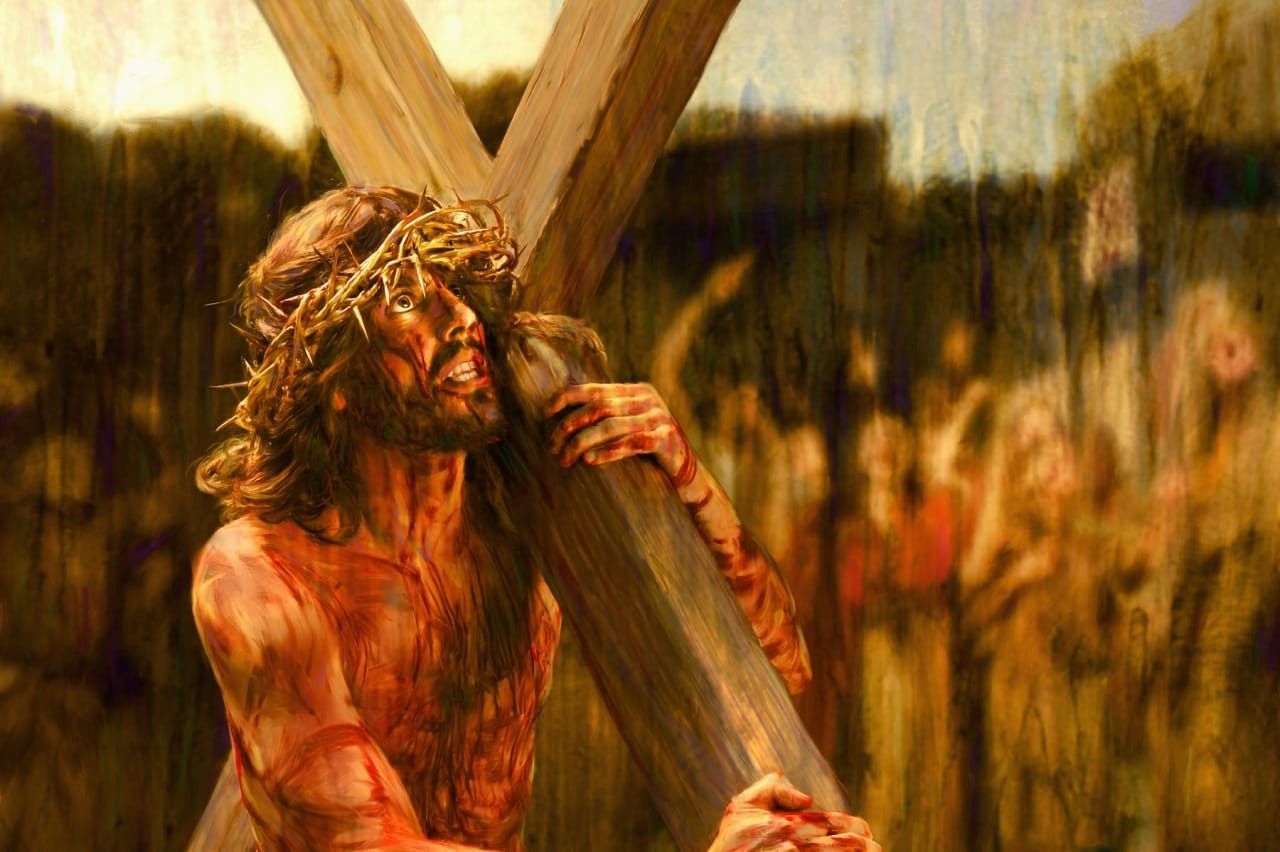
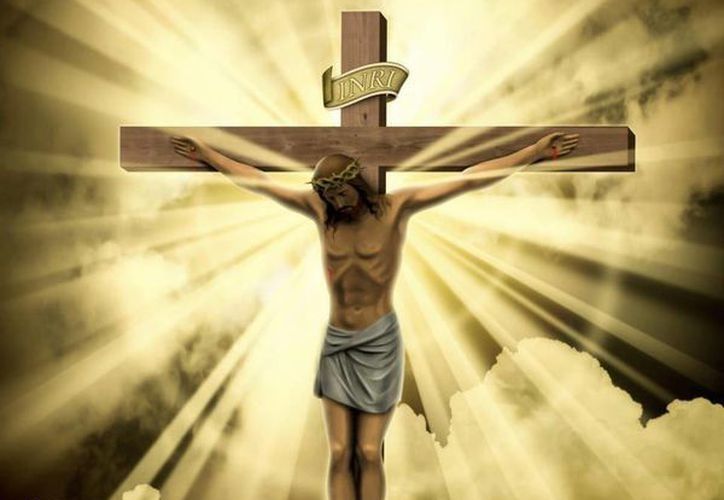
During a bitter argument with the Jews, Jesus said: “I lay down my life in order to take it up again. No one takes it from me; I lay it down of my own free will, and, as it is in my power to lay it down, so it is in my power to take it up again ” (John 10: 17-18). Those who executed Jesus did so only because he not only allowed it but explicitly chose it. This is borne out by the events leading up to his death, starting in the previous week. Bethany He is on his way to Jerusalem and reaches Bethany where he had raised Lazarus from the dead a few days before. Suddenly something happens which is his Father’s signal to him that he must enter into the final drama of redemption. It is the sign he has been waiting for: Gentiles come looking for Jesus. He then proclaims that the hour has come for the Son of man to be glorified. Suddenly, he is overcome by distress saying “Now my soul is troubled. What shall I say: Father save me from this hour? But it is for this very reason that I have come to this hour; Father glorify your name!” A voice came from heaven, “I have glorified it and I will glorify it again”. Jesus said: “Now sentence is being passed on this world; now the prince of this world is to be overthrown, and when I am lifted up from the earth, I will draw all men to myself" (John 12: 27-32). after a moment of fear, he makes the decision to go ahead, and takes up the terrifying burden of our redemption, totally committed to his Father’s will. God has chosen Jerusalem to be the epicentre of divine-human intercourse. Jesus’ heart is heavy as he approaches it to bring to a head the time of judgment. As he drew near and came in sight of the city he shed tears over it and said, "If you in your turn had only understood on this day the message of peace! But, alas, it is hidden from your eyes!” He prophecies the coming destruction of the city and its inhabitants. “And all because you did not recognize your opportunity when God offered it”. (Luke 19: 41-44) Palm Sunday Jerusalem’s name means something like 'where wholeness is developed' or ‘where peace is forged’. He enters as King of Peace, riding not a war horse but a donkey. The people go wild with joy. They cannot help themselves. The Cosmos is crowding down upon them, gathering for the final battle. When Some Pharisees tell him to silence the crowd, he answered, "I tell you, if these keep silence the stones will cry out." (Luke 19: 40) He then goes to the temple, makes a whip, and rids it of all the market stalls which provided a nice income for the Chief Priests and Jewish leaders. They are enraged and come to protest. It is the last stage in the bitter arguments he has provoked with them publicly exposing their hypocrisy. He has staged the whole series of confrontations to leave them no choice but to seek his death. He is brutally forcing the issue. He is entirely in charge of the developing events. Passover After four days, he celebrates the Passover, the Last Supper. As he institutes the Eucharist, his eternal sacrifice of himself is begun. We join in that same sacrifice at every Mass. At the end he says: “The prince of this world is on his way, He has no power over me, but the world must be brought to know that I love the Father and that I am doing exactly what the Father told me. Arise, let us go” (John 14: 30-31). He has summoned Satan to the final cosmic battle. Satan comes with all his powers of darkness. From now on, the full power of evil will press down upon the city. Jesus feels it keenly. He leaves the city and crosses the Kedron Valley to the Garden of Olive Trees. He tells the disciples “pray that you do not be put to the test”. Then he withdrew from them, and knelt down and prayed. "Father, if you are willing, take this cup away from me. Nevertheless, let your will be done not mine. Then an angel appeared coming from heaven to give him strength. In his anguish he prayed even more earnestly, and his sweat fell to the ground like great drops of blood. When he rose from prayer he went to the disciples and found them sleeping for sheer grief” (Luke 22: 39-46). They cannot stand the weight of darkness gathering around them. Judas comes with the soldiers sent by the Chief Priests and the Pharisees. “Knowing everything that was going to happen to him, Jesus then came forward and said, "Who are you looking for?" ·They answered, “Jesus the Nazareen”. He answered “I am he”. When he said “I am he”, they moved back and fell to the ground” (John 18: 2-8). As he voluntarily surrenders himself into their power, see what power he himself emanated! Later Pilate senses it. Foolish Peter cuts off a soldier’s ear. Jesus heals it and tells Peter to put his sword away “Or do you think that I cannot appeal to my Father who would promptly send more than twelve legions of angels to my defence? (Luke 26:53). The total ferocity of Satan As he relinquishes his power, all hell, literally, breaks loose. People change and their worst characteristics take over. When he was eight days old, Simeon had prophecied that through him "the secret thoughts of many would be laid bare" (Luke 2: 35). His followers, who have witnessed multiple, amazing, miraculous demonstration of his power, are overcome by craven fear and run away. Peter, the foremost among them ends up swearing and cursing that he does not know Jesus. Judas the traitor hangs himself. As he is first held at the palace of the high priest, “the men who guarded Jesus were mocking and beating him. They blindfolded him and questioned him. "Play the prophet," they said. "Who hit you then?" And they continued heaping insults on him” (Luke 22: 64). Later the Roman soldier whipped him within an inch of his life and then mocked him. Herod dressed him as a fool. After his first trial, the Chief Priests and Pharisees, men who usually clung rigidly to their dignity, turned into a rabble, striking him and spitting on him. They will continue to break out into frenzy as he hangs on the cross throwing dirt at him and loudly ridiculing him. Pilate’s wife has terrible dreams about him, and urges her husband to have nothing to do with it. But the mob is going crazy and Pilate’s best efforts fail to prevent the death penalty. The Reversal of History As the Original Sin along with all its horrible consequences are pouring into the chalice that he will drink in order to break its power, the Woman, the New Eve comes and takes her place with her New Adam. She binds herself to him in her heart, a heart pierced by all the sorrows of the world. Who can imagine the force of evil driving his torturers and spirit-tormentors, and how it tore his heart to shreds? He had said to Satan’s henchmen “This is your hour when darkness reigns” (Luke 22:53). The full force of evil which had held the world in bondage almost broke him; he even lost the sense of his Father which he had enjoyed all his life. Who can imagine such torment? Who can imagine such courage and tenacity as he opened all of human vileness up to his Father, for the wonderful Father to heal? At the end, he proclaims that the battle is won, and with a loud cry breathes his last. The darkened land was hushed for three hours. The people slunk home deeply disturbed. That night the spirits of the dead roamed the streets. For a while the earth held its breath awaiting a sign of release. That came on Easter morn. He took up his life again, as he had predicted.
By Fr. Brian Murphy March 31, 2026
The fruit of the tree of life. Does consciousness depend on the brain? I watched a video of Dr Margaret Ashford, an American neurosurgeon, speaking about when she “flatlined”; her heart stopped for 6 minutes during open-heart surgery and they fought for 5 minutes to restart it. During that time, she experienced immense consciousness. For 40 years she had strictly adhered to the belief that consciousness was a product of certain electronic stimulations of nerves and physical elements in the brain. She had been able to stimulate reactions by triggering them and had worked to repair brain functions. She was totally convinced that we are machines who produce consciousness, and this ceases when the machine inevitably wears out. She had dismissed talk of spiritual things as “soul language”, which she explained as a reaction of people who were too scared to face their own inevitable extinction, something she said she had been reconciled to quite peacefully for a long time. All that changed when she experienced amazing consciousness while her brain was without oxygen and non-functioning. She described it as not being limited by ideas and reasoning processes, but as a sort of universal knowing, being within and connected to something which was the ultimate cause of her being, while being conscious of every other conscious being. Now she knows that her previous materialistic view is entirely inadequate. What struck me was her sense that that experience of hers was what knowing is really like. But when you compare it to the knowing experienced by the many others who have had near-death experiences, they are hugely varied. Some speak of it as a journey. I believe that her experience was a momentary glimpse of something, which was only a beginning, and that she could easily jump to some very strange conclusions, based only on that brief experience. For example, I did not hear her talk of using her will, which is fundamental to personal activity. There are religions which speak of being lifted into universal consciousness as the goal of all spiritual searching. Some of these add a belief in reincarnation as the path each individual must take in order to attain it. That seems very odd to members of the three religions which believe in one God, Jews, Muslims and Christians. While the Jews and Muslims speak of God as an infinite, ultimately un-comprehensible being who is the first cause of all reality, and who will always be separate from humanity, we Christians believe that God has entered our material world in order to lift us into the godhead itself. What is the material world for? This raises the radical question: what is this material world for? Is it to end up as a sort of paradise where all that is good and pleasant in our earthly existence is emptied of evil and lifted into intense permanent joy? That is what we tell children, and suicide bombers believe it. Is it us human beings freed from material existence and becoming pure consciousness like Gnostics believe? Or is it a marriage of the spiritual and the material, where all is new and complete? That is what we Christians believe. Yes, we are on a journey. Fundamentally, it is a mystery that we are journeying into, a mystery too vast for us to know comprehensively, but a mystery to be explored with all the faculties we have, a mystery which we need to envisage by piecing together as well as we can the information given to us in revelation. What God has told us? The gradual revelation of God’s self to humanity became complete when the Son of God became human. The information about this process is available in the Sacred Scriptures, and the Spirit-led communal reflections on them over centuries by faithful seekers of truth. At the beginning of Scripture we are given the tale of Eden, a story not of historical accuracy, but one that God selected as the best vehicle for us to understand the creation and our own beginnings. It talks of there being two trees at the centre of Eden, the Tree of Knowledge of Good and Evil , and the Tree of Life . These bore fruit which the first human being were forbidden to eat. Against God’s will, they chose to taste the knowledge of good and evil, and set off on a course away from God, strewn with disasters. They were expelled from Eden and an angel with a sword of fire stood at the threshold to prevent them entering, particularly to prevent them accessing the Tree of Life. One of the deepest longings of our hearts is to access that tree of everlasting life and eat its fruit. We dread death and dream of achieving long life, even permanent life - cryogenics offers body-freezing for about $100,000; they will wake you up when they discover a cure for the sickness that caused your death. The Scriptures go on to explain that God did not desert us and that he set in process the course whereby he would lead us to a turning point where we would eventually be able to eat of the Tree of Life. That tree was planted on the hill of Calvary two thousand years ago, and its fruit is God-become-man, Jesus Christ. I thought I heard him say today – he was speaking as a carpenter- “I never loved wood more than this wood of the cross”. And I glimpsed for a moment that he is still there glorified, though still suffering in his mystical body the Church until all is complete. I saw that the blood and water flowing from his pierced heart was not only physical but really and mystically the baptismal fountain gradually engulfing and cleansing the whole human race and all of material creation, and that the body and blood is really and mystically the food for humanity during the long process of ascent into glory. I saw that the mystical is real. It is the spiritual, centred in and emanating from divinity, which is pressing down upon the earth in order to penetrate all humanity and all creation with love, and to bring us away from subjection to a mixture of good and evil to being totally enveloped by good.
By Webmaster March 17, 2026
God is straightening out our crooked selves and we become wise. J esus came from his home in the infinitely loving Trinity into our world. He came to restore us to the image and likeness of God. He cured our brokenness by drawing it all into himself and, in unimaginable agony, he struggled relentlessly to trust that his Father would raise him up and heal him and all humanity along with him. This the Father did, and the remedy for all our brokenness was revealed. He sacrificed his own control of everything so as to leave open completely the door for the Father to pour in his infinitely loving grace. Thereafter, the cure for all our ills is to follow him into the Father’s heart. The Spirit of Jesus leads us on this journey, and in that place of grace we gradually allow him to love us to perfection. That is how we achieve integrity. Integrity is where our fractured selves are coming together and we become who we are meant to be. The Journey to integrity necessarily involves pain, which we can either fight and rage against, or we can undergo with our crucified Christ. The Greek poet Aeschylus expressed it well when he wrote: “He who learns must suffer. And even in our sleep, pain that cannot forget falls drop by drop upon the heart, and in our own despair, against our will, comes wisdom to us by the awful grace of God” (Agamemnon). I am not saying that many of us achieve wholeness in this life, but we make striking progress if we allow the hand of God to mould us. That might involve a gradual lessening of our capacities and self-sufficiency. We may suffer indignity, loss of mental clarity and have to rely on others for help. Yet inwardly there can be an integration of our being which does not depend on bodily health or freedom. We can become humble as we gradually realise how much we are loved. With that comes a growing tranquillity as we experience God’s grace leading us along the path of personal integration. The book of Daniel (12: 3) says: “Those who are wise shall shine like the brightness of the universe, and those who turn to righteousness like the stars forever and ever”. But to “shine like stars” we have a long journey to complete in the process of becoming so totally pure and perfect that we are able to live forever within the Trinity. Johann Sebastian Bach beautifully expressed the mystery of the human ascent into the family of God: “Word of God, our flesh that fashioned, with the fire of life impassioned, striving still to truth unknown, soaring, dying round Thy throne” (Jesu, Joy of Man’s Desiring). What can seem like dying, can instead be our innermost selves being brought to life under the profound cherishing of our Father. Thus ‘comes wisdom to us by the awful grace of God’.
By Fr. Brian Murphy March 17, 2026
I was out walking. It was good exercise; it was bracing. Walking keeps you fit; the fresh air does you good. It is especially uplifting in spring. There is the promise of new life in the air, and sunnier days. I was thinking to myself “Lent” is an old word for “spring”, the lengthening of growth. Lent is a fresh start: it calls us to roll up our sleeves, to come closer to God and live better lives. At the end is the great feast of resurrection. What a positive message! So I was walking along thinking positive thoughts. It was good. Then I met a vagabond going the other way. Their looked a mess and shuffled along. But there was something in their eyes that spoke of a struggle to fulfil a great purpose. This encounter got under my skin; it unsettled me. I asked the Lord who is that. He said it is me. Have I been treating Lent too lightly?
By Fr.Brian Murphy February 18, 2026
WHAT IS METAPHYSICS ANYWAY? The Greek word “physica” means 'what is natural', 'what can be observed and measured'. Generally it is the physical world and the exploring of the physical world. It is the realm of science . The way Science works is to suggests a theory and experiments with it, until it arrives at scientific facts - something that is proven beyond doubt. An example of that is giving paracetamol to people with a headache and it healing them. Those facts which have been proved then give rise to new theories which need to be tested, and so scientific knowledge grows. We know a lot of facts, and we have some pretty impressive theories that people are working on, like cures for cancer and Einstein’s theory of relativity. The Greeks had another word, "meta", meaning "above and beyond" which they added to the word “physica” to describe thinking about the principles which govern all human thought and activity, including how scientific research is carried out. They called this branch of study “Metaphysics” . This is the realm of principles which are not observable, and need to be assumed. Simply put, it is the overall view of things which each one of us adopts. These can be described as “world-views”. There are many of them like the way cynics think everything is meaningless, or sceptics think you can’t trust anything. There is definitely a Christian World-view. THE Christian WORLD-VIEW I listened to a discussion between Dr Jordan Peterson the psychiatrist and thinker and Dr Christopher Dawkins the famous atheist, in which Peterson demonstrated that the scientific endeavour arose out of the Christian world-view. They are the following: Truth tends towards unity, it doesn’t contradict itself. There is a logical order that is intrinsic to the cosmos. That fundamental order is good. It is intelligible to human beings. Discovering that order and aligning ourselves with it makes life more abundant. Ultimately, the truth will set you free. He goes on to make the point that these axioms are religious and derive from the Judeo-Christian world-view. Otherwise, how can you account for the way science emerged in Europe? Then he states the fact that this system of thought is under attack from all quarters today, which threatens the whole search for knowledge including science. Dr Dawkins agreed. Until recently, the Judeo-Christian metaphysical substrata underpinning science was intact, and enabled great advances in our universities. Now they are being questioned, with people's feelings being put over as more valid than rigourous truth. Such confused thinking threatens to erode excellence. How has this happened? It is because people have taken the clothes of Christianity, and rejected the body within. Without the body the clothes become a shapless pile. Christianity does not have a body of thought and knowledge at its centre - it has the person of Christ, the incarnate Word of God. The knowing of him is not just in our minds, but in our hearts and being. It is fundamentally a relationship, heart-to-heart with God, not a set of convictions. This relationship with Him who is the Word , truth itself, leads us to the fullness of life and also of science.
By Fr. Brian Murphy February 5, 2026
On the feast of the Presentation in the Temple (2 nd February), the readings of the Mass shouted one message to me, God is counter-intuitive . We read from the prophet Malachi's book which is the last in the Old Testament. He prophesied that the final age in the long story of humanity would begin when “the Lord you are seeking will suddenly enter his Temple” . Every time the Lord entered his Temple in the past it was dramatic - the arrival of the breath-taking cloud of his presence made people fall to the ground in worship. But today the Lord enters quietly as a tiny baby in his mother’s arms. The event was unnoticed except by an old man and an old woman, Simeon and Anna. Surely, the High Priest and all the ministers of the magnificent Temple should have been there for such an epoch-making occurence. No, these two humble people represented the real achievement of Israel from the time of Abraham - holiness. For all their amazing history, the Jews had only produced a small group of devout lovers of God, but, in God’s eyes that is enough to call down the Messiah. God only needed a small plot of good earth for the Word of God to leap down and sow the seed of the new age. Were King Herod and all the civic dignitaries summoned from Jerusalem to officially meet the new-born King? No, just some night-workers, shepherds from the hills around Bethlehem. How counter-intuitive is that? Horoscopes are foolishness, yet when God manifests the world’s saviour to the gentile world, it is Magicians, star-gazing writers of horoscopes that he chooses to be the representatives of the world. Fools they may be, but also earnest seekers of the truth. They are the best that a needy world can offer. You have to be earnest fools to travel hundreds of miles believing you have discovered the route in the stars. Finally, God chooses you, the least of his children, to be his dearest child! On second thought, it isn’t that God is counter-intuitive, it is us who have everything backwards. When mankind fell, what a fall we had! Thank God the resurrection is now under way. But it is holy, humble, earnest fools who will be God’s tools as he brings it about.
By FR. Brian Murphy February 5, 2026
St. Carlos Acutis - a saint is in his youth is calling to others
By Fr. Brian Murphy January 28, 2026
THE NEW COVENANT  GIVEN IN THE SERMON ON THE MOUNT
By Fr.Brian Murphy January 28, 2026
WHAT was Jesus talking about? Last Sunday’s Gospel tells us that Jesus went all over Galilee preaching “Repent, for the kingdom of Heaven is at hand” . Do we know what he meant by “repent”? English has a narrow definition of the word 'REPENT'. For us, it focuses on human sin. It is about having remorse for a specific sin which we have to confess and turn away from; it leads to a call for God’s mercy. The Gospel of Matthew was written in Greek. Here Jesus uses the word “metanoia”, which means “to turn your life in another direction”. Here the stress is not on what we turn from but where or who we turn to. It is intimately directed to the God of mercy, compassion, faithful love and grace. So Christian repentance is primarily about opening our hearts to God’s love. In January we began the Sunday Mass readings of Year A in Ordinary Time. This is a time of new beginnings. The Church, in choosing these readings on the 3 rd Sunday of Ordinary Time, is calling us to make the New Year’s resolution of turning more deeply to the God of love. It is a time to ask some questions. Am I coasting along - not depending much on the loving God? Am I comfortable as I am? Has my once radical ambition to follow Jesus like the fishermen who leave their boats and nets grown cold? Do I need to hear the divine call afresh? It is no use embarking with the Church on a new year of grace unless I am determined to open my heart more deeply to the infinite love which is calling at the deepest level of my being. It is less than three weeks to Lent . Am I going to leave thinking about it till the last minute? Holy Spirit kindle in us the fire of your love!
By Anne Bardell January 22, 2026
Have you read our new online book - ' Our Role in God's plan' click the link here and it will take you to it.
By FR. Brian Murphy November 5, 2025
AGAPE (From Chapters 9 & 10 of our book A Message For Its Own Time .) THE HEART OF CHRISTIANITY The ‘spiritual revolution’ which is Christianity, is deepening and growing into its third phase. This epoch of great change that we are living through has such great potential. God is gifting us in the modern age with increasingly deeper insight into our humanity, such as psychology, clearer understanding of human development and vaster knowledge of the world we live in. This is causing a great deal of rethinking; our assumptions about other people and ourselves are being adjusted. The modern age seems at present to be a melting pot of ideas and theories, and these need Christian synthesising. Through the Second Vatican Council, the Spirit called us to take the modern world seriously, to dialogue with it, and to return to the basics of our own revelation and practice in order to effectively bless and enlighten the people of our day. In consequence a renewal of Christianity is developing which is still rather mixed up in most of our minds. The need to purify our thinking under the guidance of the Spirit is urgent. Where do the basics of Christianity lie? They are fundamentally summed up in John 3:16: ‘God loved the world so much that he gave his only Son so that everyone who believes in him may not be lost but may have eternal life. For God sent his Son into the world, not to condemn the world but so that through him the world might be saved’. It is the love of God which is the key to everything. That is Christianity’s basis. What does love mean? The word ‘love’ has so many meanings. We naturally think of it in human terms, but the supreme insight of Christianity is that we base our understanding of love on God’s love which is very distinct from human loving. To express this the New Testament coins the word ‘Agape’. Human love at its best can be heroic and sometimes seem superhuman. It can not happen without God’s help. But it is not always Agape. We need to understand what Agape is. In the English speaking world many of our bible translations translate Agape as ‘Charity’. That word has lost its power as ‘Charity’ nowadays largely means outreaches to help those in need. Consequently the meaning of Agape has become obscured for many of us. The word ‘Agape’ occurs over 200 times in the New Testament. Perhaps the most familiar passage where it is used is in 1 Corinthians 12-13 beginning with: ‘Be ambitious for the higher gifts, and I am going to show you a way that is better than any of them. If I have all the eloquence of men or of angels but speak without love…’ (1 Corinthians 12-13) . What is Paul getting at? He is addressing the Church in Corinth which had great spiritual gifts such as prophecy, healing, and words of wisdom, but it was riddled with division. Is he calling the community to have more consideration of each other, even the self-denial which puts others before self? No, he is talking about something much greater, something which heals the heart of the community, which is Agape. This passage (1 Corinthians 12-13) is used often at Christian weddings, with the intention of expressing the aspirations of those who wish to love wholeheartedly. Implicit in that is a prayer for God to empower us when we find love difficult. That is a gift greatly to be prayed for, and what better way for a couple to plight their troth than before the Father who alone can empower such love? But few couples imagine what they are truly asking for. Agape is something superior to human love as that is commonly understood. Paul, uses the Agape word for love in 2 Corinthians 5: 14 when he says ‘the love of Christ impels us’. Translators of the Bible take different stabs at delivering the meaning. Some say it “constrains us”, as though we are tied up by it and coerced. Some say “overwhelms us” as though we are lifted to a different dynamic than love as we normally experience it. Some say it “urges” us as though it is a deeply felt need. Clearly, Paul is attempting to describe a different reality to what we normally mean by love, even at its most heroic. The Encyclopaedia Britannica defines Agape well: "Agape , Greek agapÄ“, in the New Testament, the fatherly love of God for humans, as well as the human reciprocal love for God . In Scripture, the transcendent agape love is the highest form of love and is contrasted with eros, or erotic love, and philia, or brotherly love." This rightly states that Agape is the highest form of love, God’s love for us and our loving God back. Paul, in 1 Corinthians: 13, calls it the gift that is ‘better than any’, for which we should ‘be ambitious’. It enters the human heart and transforms it gradually. It is the true meaning of being justified or righteous. By it, our hearts are righted, set right, stood on their true basis, which is to be the beloved of God. Agape does not spring from our natural human powers to love as we know them. It is the transforming of the heart after it has entered ‘the gates of holiness…the Lord’s own gate where the just may enter’. This is a gate which the Lord alone can ‘open’ (Grail Psalm 118: 19-20). With it, the human heart is righted, because it was originally and fundamentally made for this divine love to be its primary source of life. We are the beloved children of God beautifully created to live in God’s family. That fundamental rightness was gravely upset at the Fall of mankind. But it has been wonderfully restored by Christ’s work on Calvary. Agape is the ‘greatest of all’ of the gifts of God, to be sought before all others, because it makes all other loves Christian. It purifies our human love gradually, and must be continually prayed for. In so far as we fall in love with God, we will be enabled to fall in love with everyone. Contemplation In the Our Father, when Jesus shows us many forms of prayer. He puts first hallowing the name of the Father. This is not just praise with lips and songs, but reverence and awe - ultimately adoration. I have seen a group of youngsters joyfully praising God with the enthusiasm so characteristic of youth, but then become quiet in profound adoration. Contemplation is not Meditation The habit of adoration arises from the practice of contemplation. It is distinct from meditation. Meditation is the raising of our minds to God through considering some truth about him which arises from study or spiritual reading or lectio divina or other forms such as the prayer of imagination. It leads to gradual enlightenment, but it usually is an exercise of the intellect which, at its best, can lead our hearts to burn within us. It strengthens conviction and it motivates us to hope. It disposes us to receive the gifts of the Holy Spirit especially wisdom, understanding, and knowledge. It is an essential prayer for maturing Christians, and prompts us to love God. We prepare our minds for it through focusing on truth, and we will often have to keep refocusing because our busy minds are easily distracted. However Meditation is not the path to the supreme gift of the Holy Spirit, Agape; contemplation is. Meditation is the raising of the mind to God, contemplation is the raising of the heart. Meditation exposes the yearnings of the heart for God; contemplation is the opening of the yearning heart to meet God in love. Contemplation is primarily not about what is happening within our selves; it is encountering God and knowing him. Then words fail. Concepts are inadequate. Only the heart is open to God. Jesus instructs us to use all the other forms of prayer that he includes in the ‘Our Father’, but the prayer that he puts first, contemplation (hallowed be thy name), is the deepest prayer of the heart and we are called to give time to it. We leave aside concerns, worries, thoughts, feelings and stand before God with hearts open. That is how we come to know not about him, but to know him - through love, Agape. The author of ‘The Cloud of Unknowing’ writes: ‘God’s grace restores our souls and teaches us how to comprehend him (God) through love. He is incomprehensible to the intellect. Even angels know him by loving him. Nobody’s mind is powerful enough to grasp who God is. We can only know him by experiencing his love’. In contemplation we have to enter the cloud of unknowing, set aside emotions and thoughts and images which can never grasp God, and just long for God. Distractions will come and so will deep understandings, but these need to be turned away. Gradually with time and perseverance, the sense of God’s love deepens and we become more and more devoted to our Father. Also we begin to experience Jesus’ love for everyone. As we progress we can experience dark nights of the senses and also of the soul, but the progression is into deeper and deeper loving union with God. Jesus took Peter, James and John up the mountain of Tabor to witness his glory, but when the ‘bright cloud’ (Matthew: 17: 5) descended and the Father’s voice was heard, they were terrified and fell face down. In his mercy, Jesus treats us more gently. He himself leads us into the cloud of the mystery of love to meet the Father. This is Agape, the greatest gift of God. THE CHRISTIAN HEART T he cry of God’s children Through Agape, the Holy Spirit releases within us the cry of the child of God: ‘Abba, Father!’ (Rm 8: 15). St Augustine in his Confessions writes: “Late have I loved you, Oh Beauty ever old and ever new: late have I loved you. And see, you were within and I was in the external world and sought you there, and in my unlovely state I plunged into those lovely created things which you made. You were with me, and I was not with you. The lovely things kept me far from you. You called and cried out loud and shattered my deafness. You were radiant and resplendent, you put to flight my blindness. You were fragrant, and I drew in my breath and now pant after you. I tasted you, and I feel but hunger and thirst for you. You touched me, and I am set on fire to attain the peace which is yours”. The effects of God’s children A person who is developing in Agape, becomes more and more a fountain of grace and direction to others. The gifts of the Holy Spirit grow as fruit from their lives: ‘love, joy, peace, patience, kindness, goodness, trustfulness, gentleness and self-control’ (Galatians 5: 22). How much we strive through our own selves to produce these fruits, and yet they flow from the lovers of God. Jesus teaches us to put our selves humbly before the Father so that our inner selves, our spirits, can emerge. Agape makes us naked before the Lord and other people. We clad ourselves with so many coverings. Our skin is vulnerable. All of it reacts to touch, especially if that touch is painful; it is the same with our sensitivities. So we work hard at developing a suit of armour to protect ourselves. This may give us a sense of security, but it also increasingly isolates and cripples us, though even the best armours have chinks. From our earliest childhood, our experiences of pain and the failures of love induce us to construct this armour. Bit by bit, with our cooperation, the Father’s love unbuckles the different layers of armour, allowing his love, breathing through ours, to cast his light more effectively in our world. Do not be surprised if he unbuckles it from the inside; the transformation begins in the heart, and only gradually penetrates into our words and deeds. We can see God acting in this way when, on the shore of Galilee, Jesus took Peter aside and three times asked his three times betrayer ‘do you love me’. The third time, Peter humbly, almost tearfully, confesses ‘Lord, you know I love you’. He was being called to an identity different to the strong individual he thought he was. The man, who drew the sword in Gethsemane but then ran away to save his skin, began to be a new creation. He was sensing and choosing a trajectory, the course of which would transform him into one of the dearly beloved lovers of God. Reality check God’s love gradually enables us to grow. Lovers cannot hide their true selves from each other. That is frightening because, as their brokenness is revealed, they become dependent on the love of the other to aid their healing. Faults which they could not face or fix themselves, their very vulnerability, need the lover’s kiss. Sadly, that is often not forthcoming; many lovers turns their face away. God never turns his face away. As his love penetrates the exterior of our hardened hearts, the brokenness of our hearts of flesh emerges bit by bit. It is still frightening, because we can be shocked by recognising wounds and failures which we had not been aware of, or excruciatingly shamed by admitting those we have never been able to fix. In order to heal and restore us, he will sometimes lead us into wild and frightening places calling us to face the demons that obstruct our way to fuller life. He does not hide the fact that picking up the cross daily is the way forward, but he is right there on that cross with us until it is accomplished. Oh, the joy and the peace as we become more free! Western culture idealises the right of every human person to be free, and that usually means permission to do what we want. The freedom God brings about within us is the freedom to be the greatness that we really are. Gradually we are transformed into the utterly unique image of God that each of us is. The life force of God which is gradually released into his servants, his Spirit, moves more freely in us. It is not techniques that we acquire, but life. Bit by bit it dawns on us that there is nothing else worth doing. And the process continues along the long path of becoming ‘like stars’ (Daniel 12: 3). Achievements without Agape If I dedicate my entire life to service, or use my talents superlatively, or bear unimaginable burdens, but am without Agape, I am only working out of a self that is hidebound by my armour. One day, despite my personal efforts or talents, my energy will dry up. Then I will be left languishing inside my suite of armour. It is dark there and lonely. But, if I have sought the supreme gift of Agape, and walk as one of God’s lovers, seeking his face daily, learning to cherish his presence at every step, I do not have to be superhuman or a hero. I will radiate God wherever I am. I will, in the midst of tragedy bring hope, in a broken world bring joy, and in turmoil peace. As I willingly receive the gift of Agape, it will gradually develop me. I will not lose my identity as I become a channel of God’s love. I will achieve my true identity. The more people see Christ in me, the more they will see the real me, where the Lord has help me to lose the parts that I thought made me unique and valuable. I do not need them. I am unique and valued. I am one of God’s chosen lovers. I will not be afraid of defeat and failure, because ‘all things work together for the good for those who love God’ (Romans 8: 28). Just like on Calvary, all failure will become development. Huge, even gigantic human efforts will fail to bring about a healed and wholesome world, but the actions of those who are developing in Agape will ‘renew the face of the earth’ (Ps 104: 30). The Good News we proclaim introduces people to the truly liberating energy of God, our lover. As we grow into the state of being the beloved children of God, we are revealed as the ones for whom creation is ‘waiting with eager longing’ (Romans 8: 19). As St Paul wrote to them, the Church of Corinth was proud of the wonderful charisms of healing and prophecy and teaching that they were experiencing. How much more would they have fulfilled their mission if they had put Agape at the top of the wish list for divine gifts! It seems that many of them failed to grasp this deepest teaching of Paul, because some forty years later, the fourth pope, St Clement of Rome, wrote them a long letter once more urging them to set aside their divisions. The human heart so often focuses on minimal aspirations rather than daring to hope. The next stage of Chrisianity I believe that, in our strange time, God is calling us to focus more urgently on the highest path to growth, Agape. In his poem A Sleep of Prisoners, Christopher Fry expresses it as follows: The human heart can go the lengths of God… Dark and cold we may be, but this Is no winter now. The frozen misery Of centuries breaks, cracks, begins to move; The thunder is the thunder of the floes, The thaw, the flood, the upstart Spring. Thank God our time is now when wrong Comes up to face us everywhere, Never to leave us till we take The longest stride of soul men ever took. Affairs are now soul size. The enterprise is exploration into God. The time we live in is enormously important in the process of salvation. Nature and history cry out increasingly and urgently for the human exploration into God. That urgency has been infused into us by God. The heart of the Trinity has opened and burns with desire for union with us. What Agape is not In our frenzied world of today, a new industry of wellness is emerging. To counteract the obsessive use of media and the hurried pursuit of goals, various ways of stilling ourselves and allowing our souls to breathe are flourishing. These are healthy and helpful, and certainly better than using drugs or alcohol. They might prepare us for contemplation, but mostly they seek to balance our selves so that we can be more in control. They are human techniques that lead us back to our selves. Agape leads us to the Father. It grieves me to see how some Catholic schools embrace these methods, because it is evidence of how we have forsaken the habit of introducing our children to the great tradition of Christian contemplation. Yet I have seen a school staff struck with wonder when the children of a whole primary school assembly went into deep stillness and contemplation. We offer our children the notions of the gifts and fruits of the Holy Spirit, but we should start with Agape. Jesus says of children: ‘Let them come to me, for it is to such as these that the kingdom of heaven belongs’. I would rather have a whole system of guiding people in holiness and the knowledge of God than the most impressive school system. The opinion that I have just expressed implies a revolution in our approach to education in our part of the world which would demand courage and dedication if it were put into practice, but is it not the reason why our Father has sent us into the vineyard? ‘The Spirit breathes where he will’ (John 3:6) Throughout my priestly life, I have been privileged to encounter souls that have been led into deep devotion through many paths such as Eucharistic Adoration, the rosary, praying in tongues and the celebration of the Eucharist, and also through suffering or arduous toil patiently endured. As they have matured, they have become leaven in the dough of this needy world. The lovers of God are all around us, usually hidden, but radiating Agape. I cannot draw a map of how the Holy Spirit flows, but I am sure there is an imperative need to give much more Church time to nurturing the ambition for this highest gift. From Agape all other Church outreaches should flow, and would flow wonderfully. T he Sacraments of Reconciliation and Marriage A greater emphasis on Agape can throw light on some of our current problems in Catholic practice such as the reluctance of people to avail themselves of the Sacraments of Reconciliation and Marriage. Our practice of the Sacrament of Confession often focuses on human motivation by the cold examination of sins and their opposing virtues to elicit sorrow and a firm desire of amendment. This is necessary in cases of deeply mortal sin. Normally, though, it should be where priest and penitent exercise the sacred art of discerning the movement of God’s Spirit in the soul of the person being reconciled. The Sacrament of Reconciliation is the gracious touch of God for one who is earnestly laying bare their poverty of spirit, to encourage them and draw them more deeply into the kingdom of God. Reconciliation should be a supremely rich encounter with Agape. The poor woman in the Gospel, who was publicly humiliated as her adultery was cruelly publicised by vicious plotters, did not need stoning, she needed to encounter the divinely loving gaze of the one writing on the ground (John 8: 1-11). Only then would she be set on the path towards sinning no more. The paralysed man lowered through the roof by his friends experienced that same infinite love as Jesus told him his sins were forgiven. It gave him overwhelming relief which contributed to the loosening of his seized-up limbs (Mt 9:1–8). I think the greatest surprise for both these people was the realisation that this person understands me; he is like me; he has been through these temptations himself and overcome them, and his love radiates the love of the Father of light who cherishes me and has invincible faith in me. We read in 1 Corinthians 13 ‘Love is patient, is kind, does not envy, is not boastful, is not arrogant, is not rude, is not self-seeking, is not irritable, and does not keep a record of wrongs. Love finds no joy in unrighteousness but rejoices in the truth. It bears all things, believes all things, hopes all things, endures all things’. Do we see this only as a check-list of virtues for us to aspire to? Or do we see this as a description of God himself? The woman accused of adultery and the paralysed man caught a wonderful glimpse of the loving God in the eyes of Christ. They encountered the Father who ‘keeps no account of wrongs’, and ‘is always ready to excuse, to trust and to hope’ (1 Corinthians 13: 6) in them. The true healing and strengthening of their ‘innermost selves’ (Ephesians 3: 16) had started. The Sacrament of Reconciliation should be prepared for and celebrated ioninthe firm belief that it is another step along the road to perfection. Similarly, how different a Christian marriage becomes if the couple seek Agape together! The lives of such couples as Saints Louis and Zelie Martin, the parents of St Therese shine out as examples of what the Sacrament of Marriage really achieves. Their faithful love and holiness produced daughters who were saints, one of whom is a Doctor of the Church, a supreme teacher of holiness. Why does our marriage preparation stress human relationships and fail to enlighten couples about what happens to their love when they together seek the face of God above all else? ‘Set your hearts on his kingdom first, and on his righteousness, and all these other things will be given you as well” (Matthew 6: 33) I wrote elsewhere in this chapter that the transformation (of our lives through Agape) begins in the heart, and only gradually penetrates into our words and deeds. St Catherine of Siena puts it like this: ‘ Truly the Soul’s being united with and transformed into him [God] is like fire consuming the dampness in logs. Once the logs are heated through and through, the fire burns and changes them into itself, giving them its own colour and warmth and power. It is just so with us when we look at our Creator and his boundless charity (Agape). We begin to experience the heat of self-knowledge – which consumes all the dampness of our selfish love for ourselves. As the heat increases, we throw ourselves with blazing desire into God’s measureless goodness, which we discover within our very selves. We are then sharing in his warmth and in his power’. Physical fire consumes and annihilates. The fire of the Holy Spirit does not; it matures and enhances our true selves. The adherents of some religions seek to lose their selves in the ultimate reality of universal consciousness. For Christians, eternal life is all about becoming our true selves through harmonious and full relationships and interplay with God and all creation. Jesus said: ‘Eternal life is this: to know you, the only true God, and Jesus Christ whom you have sent’ (John 17: 3). When the Holy Spirit works in us through Agape, we are already wrapped in the dynamic of eternal life here on earth. That is the ‘power from on high’ (Lk 23; 49), the deluge which Jesus told his disciples to faithfully await; that alone is the fuel for the commission he gave them to transform the world. ‘Our struggle is… against …the spiritual forces of evil in the heavenly realms’ (Ephesians 6: 12). This third phase of the Church, the third phase of the spiritual revolution which God is gradually conducting in this world, comes as many fruits of the Spirit are ripening. Countries which have heard the Gospel are experiencing peoples’ claiming the right to determine their own destiny, and, as we see in the Putin/Ukraine conflict, those who have usurped power for too long are reacting with brutality. Yet the poor and the meek of neighbouring countries opened their doors to the mothers and children of the conflict. Churches frequently became the focus of practical help. Political leaders were seen visiting services of prayer. At the same time, worried people watch, sensing the dimension of the sacred which, in their comfortable prosperity, they have neglected. The false optimism of western prosperity with its neglect of the poor is yielding to unease and an opening of eyes to the reality of evil. Those who saw the world through rose tinted glasses are becoming dismayed, and those who claimed the moral high ground while scorning those who disagreed are discovering that both their attitudes and those of their opponents are far from answering the deepest yearnings of humanity. We are entering a time when those countries which have blithely, even methodically, thrown out the message of Christ are going to become more earnest in seeking authenticity. Christianity itself is facing up to and dealing with problems within itself which it has evaded. The stage is being set by God for the Church, renewed through deepening its members’ holiness, to offer afresh the message of God’s love and salvation. Political pundits hurry to define the near future as a ‘new cold war’, but the children of God should see it as a special time in the progress of the spiritual warfare Jesus came to cast upon the earth. The millions of members of the Royal Priesthood should not be captivated by the preachers of dread and futility, but become renewed in the vigour of the Spirit. Maybe we have to resurrect an old word, and recognise that we have to become more deeply devout. That word places the emphasis primarily on seeking the face of the Father in contemplation, from which authentic actions for peace and love will flow. These actions are the ‘spiritual sacrifices’, the acts of loving service among which prayer and the faithful fulfilling of small duties are the biggest part. It is not major strategies which are the main weapons in the armoury of the children of God. We fire bullets of faithfulness, seldom missiles. God looks after the strategies. Most of today’s wars and conflicts are about securing energy resources to enable people’s life styles to prosper. For us Christians, our energy comes from faith, hope and Agape, powers which God gives to those who ‘worship in spirit and in truth’ (John 4: 23-24) . In today’s many outbreaks of war and violence, the distortion of truth through propaganda is rife. But there is also an alarming eruption of truth distortion in all areas of life. Here again the spiritual warfare with Satan is coming to a head. Polarisation and hatred are weighing down heavily on civilisations that thought themselves advanced and sophisticated. All over the world the dissensions of the early Church of Corinth are being repeated. St Paul’s remedy is just as urgently to be sought today: to ‘be ambitious’ for the ‘way that is better than any’: that is Agape. As we Christians become transformed and gently permeate our world with the fruits of the Spirit, this current critical battle in the spiritual warfare will be won. ‘Not on this mountain nor in Jerusalem’ (John 4: 21) The Samaritan woman that Jesus met at the well questioned where true worship is centred. He replied that it is not in a place but in each mind and heart. So we find that Jesus, during his ministry, ‘taught his disciples’ (Mark 9:31). His teaching opened people’s minds, to know the truth about God. That gives rise to ‘worship in truth’ (John 4: 23-24). But the knowledge of God cannot stay in the mind. It is only the key to opening the door of the heart to ‘worship in spirit’ . ‘That is the kind of worshipper God wants’. Jesus was talking about Agape. The harvest of love Jesus told us ‘ when you see me you see the Father’ (John 14: 9). Wherever he went, people instinctively sensed Agape, the love of the Father. So wondrous was the healing personality of Jesus, and so compelling his words that people dropped what they were doing and flocked to him. Their hunger for God moved him to infinite zeal and compassion. Listen to Jesus’ reaction as he reflects on the multitudes he attracted: ‘And when he saw the crowds he felt sorry for them because they were harassed and dejected, like sheep without a shepherd. Then he said to his disciples, "The harvest is rich but the labourers are few, so ask the Lord of the harvest to send labourers to his harvest"’ (Mt 9: 36-38). The labourers we need are not hired men or women who are not motivated by sharing Christ's love of his Father, but are driven by a mindset which aproximates to Christianity, but not by hearts driven by Agape, the continual seeking of the face of God . It is no wonder that their work seems so fruitless. Also, a more profound ambition for the divine gift of Agape would dispel much of the confusion we see in the Church today. 1]
By Fr Brian Murphy August 15, 2025
SOME OF THE MARVELOUS CATHOLICS THAT WE MET AT NEW DAWN 2025 I was Chair of the committee who organised the Charismatic Days of Renewal at Hopwood Hall in the 1970s and 80s, a position I left to concentrate on parish work for the next 35 years. It has been interesting to visit the New Dawn Charismatic Conferences in 2024 at Walsingham and 2025 at Barton. What struck me most was the way the first experiences of spiritual renewal of the early days has now matured into a lay people increasingly stepping forward with dedication and authority to serve the Church in cooperation with the clergy. The authority comes from increasing closeness to God and dedicated attention to their own formation. I heard the stories of some amazing people – let me tell you about a few of them. Deacon David (himself not a layman) told me of 5 men entering the Church in his parish in Northwich this Easter. He called it “the Quiet Revolution”. If you look on this website at Straws in the Wind you will read more about the “Quiet Revolution”. People are increasingly turning to the Church in this age which has drenched them in trivia and misinformation, especially men. Karen told me about the Perpetual Adoration in her Church, St Joseph’s in Stockport, and how it is changing the parish and the area. Where there is Adoration, there is contemplation, which leads to intercession, the prayer that moves mountains. That is what our new book is about; it is the secret weapon of the Church. Have a look at Our Role in God’s Plan on this website. Declan, a psychiatric nurse, told me about how he and others organise a study session on Zoom from 7.00 to 8.00 every weekday morning. Last year they went through the bible with Fr Mike Schmitz, and this year they are following his Catechism in a Year. There are about 70 people taking part, and around 200 have participated. We put our ministry, Hopeful Catholics , under the patronage of St John Henry Newman. Our inspiration is this vision of his: ‘What I desire in Catholics is the gift of bringing out what their religion is. I want a Laity, not arrogant, not rash in speech, not disputatious, but people who know their religion … who enter into it, who know their creed so well that they can give an account of it, who know so much of history that they can defend it.’ Newman would rejoice to hear of this early morning study. Nancy May , an ex-lawyer from Edinburgh, spoke with joy of her Masters Degree in Theology, which she had taken not so that she could create better job opportunities, but so that she could serve the Church in her parish, especially as a catechist for first communion children. She isn’t being reactive by just repeating material she has been given, but proactive seeking to give it her best. Rachel , who works for Rachel’s Vineyard, told me of how her own experience helps her to help women who have had abortions. She said that many despair because they think it is the unforgivable sin, and that almost all those she encounters were broken people long before they had their abortion(s). Her organisation offers reconciliation with God, integration of shattered selves and “futures full of promise” (Jeremiah 29: 11) not just to women who have had abortions, but also to mothers, fathers, grandparents, any family member and also those that worked in the abortion industry. She asked me to include this: Hurt by abortion? Contact rachel@rachelsvineyard.org.uk rachel@rachelsvieyard.org.uk rachel@rachelsvieyard.org.uk Owen , a young man who works for SPUC, the Society for the Protection of the Unborn Child , told me of his work with young people and students. It is very tough in Universities, where the Pro-abortion lobby are fanatically dominant. Yet there is change. Do you remember the shocking scenes in Manchester University in March of last year when some Pro-life Manchester students, most of whom are Catholic. left “terrified” as an out-of-control mob raised barricades, spat on them, threatened, and wished rape on them for their pro-life views? Owen said that on visiting them this year a remarkable thing has happened; many other students who were silent of hadn’t really thought about the issue had been so disgusted at the actions of the mob that they are coming out in support and genuinely inquiring about pro-life matters. That is a picture of modern-day martyrdom. Owen himself told me about how his friendship group at home numbering 16 were all atheists, but 6 of them are now Catholics. At university 5 friends joined the Church as well, also their professor who is now teaching scripture in a seminary in the USA. One couple spoke of their deep disappointment as their flourishing parish changed when a new parish priest came, but their charity and love are gradually having an impact. They are beacons of Christ’s hopeful people. It is not always bright skies; we will often be asked to pray our way through storms and dark moments, but “for those who love God all things work together for good,” (Romans 8: 28) Helen let us know about her own journey and how she was helped by Beginning Experience a ministry in the Catholic Church that addressed the needs of those who experienced loss of a spouse - whether through widowhood, separation or divorce. She is now working with them to help bring healing to others. These are just a few of the spirit-led Catholics we encountered. It was a joy to be there and so hopeful!
By Anne Bardell August 9, 2025
Did you attend New Dawn in Manchester 1st-3rd August?
Christian joy comes from the firm conviction that our Father in heaven is bringing about a renewa
By Fr. Brian Murphy July 26, 2025
What is the difference between fun and joy? The first is temporary emotions the second is a permanent state of mind. Christian joy comes from the firm conviction that our Father in heaven is bringing about a renewal of the face of the earth. Our joyful hope is not an emotion, it is a response to the fact that this is true. Our wonder proceeds from the realisation that the Father has sent his Son to earth in order to bring about that restoration. As we come to know Jesus our amazement just keeps growing. We are so blessed! In recent times, while the world is filling with negative let-downs, and noisy disagreements, we Christians have been undergoing a process of correction and renewal from our roots upwards. We have found this challenging and painful, but our Father has directed it in order to prepare us for the next stage of expansion of his Kingdom. It is almost complete and the time of growth is beginning. Some might say we are not ready in the West because of the shrinking of religion, but it is when we own up to our weakness that God is most able to show his strength. Look at the few insignificant individuals praying in the upper room on the eve of Pentecost. What God did in the next 24 hours with them was the definitive beginning of the final age of humanity. It is in the West that the greatest cleansing of the Church has been focused, because it is in the West that the new stage of Christianity is being born. At the same time that God has been cleansing his Church, he has, in the West, been revealing wonderful potential for human development through scientific progress. This has inflated a huge balloon of human self-satisfaction, but through various crises he has allowed that to be well and truly punctured. He has caused people to become disillusioned in order for them to turn to him; then we will be able to use the great richness he has blessed us with to make a better world than we have had before. Now people in the West have begun to search for real meaning. Zechariah (8: 23) prophesied: "Yahweh Sabaoth says this. In those days, ten men of nations of every language will take a Jew by the sleeve and say, 'We want to go with you, since we have learned that God is with you.' " The place of the Jews in God’s plan has now been widened to all who believe in Christ. That’s us. Are we ready? This book is our attempt to help you deepen your understanding of what God is doing in our day, and to throw light on how you are crucially involved. We are putting it on our website as it is developing so that your comments can help us complete it .
By Anne Bardell April 16, 2026
Visiting candidates for the Priesthood from a lay point of view. During Holy Week we had the privilege of staying at the English seminary in Valladolid in Spain. There were 19 lads who were two thirds of their way through the propaedeutic year. This means they were on the 1 st year of preparation and training for the priesthood, which would be followed by 6 years in seminary in Rome at the Venerable English college, Oscott in Birmingham, or Allen Hall in London. It was a real gift to have so many wonderful conversations with them about the course they are following, the thought processes they are led through and their hopes for their future, and the future of the Church. They were men on all different ages – some still very young whilst others had been in business or industry after university. Many were from the UK but there were also four lads from Canada and three from Norway as well as one lad from the Armenian tradition and one from Brazil ( although bnased inth eUK), and other countries were also represented. So, there was a mix of cultures, languages and traditions. It was a joy to hear their views on the progress of the Church around the world and their involvement in it. Their willingness to sit and chat and the warm welcome they gave us was incredible. There were also members of staff present ( four of whom were priests and one lady) as well as some of the families and friends of some of the seminarians. It was interesting to hear of the visiting speakers they have during the year, the visits of some of the bishops of men in the current group, visits to Lourdes and this week they are on the Camino to Santiago de Compostella. Besides this we had the chance to hear from the parents and families who are part of this process as they support their sons. Many were trying to work out what it means for them and their family in the future which gave us a very different perspective. The conversations were at times light-hearted and great fun, but many went on to be very deep and touched on ideas about where the Church had come from and what this generation of young people consider to be the future of the Church. Many of the lads had received great support from friends and family, but several had battled with views of folk who thought they were wasting their life and did not understand the call of God to this vocation. They expressed their thoughts on the archaic processes of past seminaries which many alumni had shared with them over the months. Without any prompting these men stated that they wanted to go to seminary not only to understand their vocation but to receive training to be the best pastors they can be and to learn how to serve God in the best way possible. Although they sometimes seemed young and idealistic their course of thought was true and honest. One of the most significant things I discovered throughout these conversations, both with staff and students was to learn that this propaedeutic year is all about the foundation of prayer in their life. The students are led to develop habits of prayers, to learn how to use the breviary, to discover the meaning of scripture through Lectio Davina, to study the Catechism of the Church and to question themselves about their own relationship with God. This was not just to cover the basis and tick the boxes there was a real desire to listen to God with their hearts. From many conversations with older priests, I came to the conclusion that this often seemed to be missing in seminaries in the past and it was great to hear this is the first thing they tackle and develop in the lives of these young men. Without prayer and a relationship with God at the centre of their lives how can these possible future priests embark on the next stage of their journey? Even if some discover they are not called to the priesthood this foundational year will be a corner stone in their future lives. We manged to attend many of the services and times of prayer in the college and although very nervous the lads got stuck into the things they were asked to do, such as sing the Psalms which many had only done in practise; to read with confidence and to serve on the sanctuary. They did this with great joy and gusto. I am totally sure I would never have attempted singing solo as they did, credit must be given to them, especially if they were slightly tone deaf. Well, done lads!
By Anne Bardell April 16, 2026
Whist visiting the English College for Seminarians in Valladolid we attended the Triduum services at the college but we were also able to see several of the Semana Santa processions in the wonderful town of Valladolid. It was quite an experience. On Maundy Thursday morning the seminarians were part of the very long procession of clerics in the Chrism Mass at the cathedral. It was an incredible experience for them, to take part in a huge Chrism Mass, as many had never been to this in their own diocese. On Good Friday they led the grand procession of 33 floats depicting the passion and death of Jesus as the drum beat resounded throughout the city. The city had something of a festive air as families strolled around the town meeting up with other family members or friends for coffee or snacks. Yet even though it felt like a holiday, the atmosphere was still quite sombre and low key. It was as though people were aware something immensely important was about to happen. As the days of Holy Week progressed the atmosphere seemed to build. If you are familiar with the Spanish culture, you will know these lovely warm people cannot go two minutes without chatting and yet wherever you went, they were waiting around in silence or talking in low voices. We saw the Confraternities preparing and bands of young musicians, many older teenagers but younger ones too, as they began to line up in silence for the processions to begin at various churches around the city. They began their long slow mournful processions with tableaux of the passion of Christ, often carried (and occasionally wheeled), by members of various brotherhoods, some with their faces covered, others not.
By Fr. Brian Murphy March 31, 2026
During a bitter argument with the Jews, Jesus said: “I lay down my life in order to take it up again. No one takes it from me; I lay it down of my own free will, and, as it is in my power to lay it down, so it is in my power to take it up again ” (John 10: 17-18). Those who executed Jesus did so only because he not only allowed it but explicitly chose it. This is borne out by the events leading up to his death, starting in the previous week. Bethany He is on his way to Jerusalem and reaches Bethany where he had raised Lazarus from the dead a few days before. Suddenly something happens which is his Father’s signal to him that he must enter into the final drama of redemption. It is the sign he has been waiting for: Gentiles come looking for Jesus. He then proclaims that the hour has come for the Son of man to be glorified. Suddenly, he is overcome by distress saying “Now my soul is troubled. What shall I say: Father save me from this hour? But it is for this very reason that I have come to this hour; Father glorify your name!” A voice came from heaven, “I have glorified it and I will glorify it again”. Jesus said: “Now sentence is being passed on this world; now the prince of this world is to be overthrown, and when I am lifted up from the earth, I will draw all men to myself" (John 12: 27-32). after a moment of fear, he makes the decision to go ahead, and takes up the terrifying burden of our redemption, totally committed to his Father’s will. God has chosen Jerusalem to be the epicentre of divine-human intercourse. Jesus’ heart is heavy as he approaches it to bring to a head the time of judgment. As he drew near and came in sight of the city he shed tears over it and said, "If you in your turn had only understood on this day the message of peace! But, alas, it is hidden from your eyes!” He prophecies the coming destruction of the city and its inhabitants. “And all because you did not recognize your opportunity when God offered it”. (Luke 19: 41-44) Palm Sunday Jerusalem’s name means something like 'where wholeness is developed' or ‘where peace is forged’. He enters as King of Peace, riding not a war horse but a donkey. The people go wild with joy. They cannot help themselves. The Cosmos is crowding down upon them, gathering for the final battle. When Some Pharisees tell him to silence the crowd, he answered, "I tell you, if these keep silence the stones will cry out." (Luke 19: 40) He then goes to the temple, makes a whip, and rids it of all the market stalls which provided a nice income for the Chief Priests and Jewish leaders. They are enraged and come to protest. It is the last stage in the bitter arguments he has provoked with them publicly exposing their hypocrisy. He has staged the whole series of confrontations to leave them no choice but to seek his death. He is brutally forcing the issue. He is entirely in charge of the developing events. Passover After four days, he celebrates the Passover, the Last Supper. As he institutes the Eucharist, his eternal sacrifice of himself is begun. We join in that same sacrifice at every Mass. At the end he says: “The prince of this world is on his way, He has no power over me, but the world must be brought to know that I love the Father and that I am doing exactly what the Father told me. Arise, let us go” (John 14: 30-31). He has summoned Satan to the final cosmic battle. Satan comes with all his powers of darkness. From now on, the full power of evil will press down upon the city. Jesus feels it keenly. He leaves the city and crosses the Kedron Valley to the Garden of Olive Trees. He tells the disciples “pray that you do not be put to the test”. Then he withdrew from them, and knelt down and prayed. "Father, if you are willing, take this cup away from me. Nevertheless, let your will be done not mine. Then an angel appeared coming from heaven to give him strength. In his anguish he prayed even more earnestly, and his sweat fell to the ground like great drops of blood. When he rose from prayer he went to the disciples and found them sleeping for sheer grief” (Luke 22: 39-46). They cannot stand the weight of darkness gathering around them. Judas comes with the soldiers sent by the Chief Priests and the Pharisees. “Knowing everything that was going to happen to him, Jesus then came forward and said, "Who are you looking for?" ·They answered, “Jesus the Nazareen”. He answered “I am he”. When he said “I am he”, they moved back and fell to the ground” (John 18: 2-8). As he voluntarily surrenders himself into their power, see what power he himself emanated! Later Pilate senses it. Foolish Peter cuts off a soldier’s ear. Jesus heals it and tells Peter to put his sword away “Or do you think that I cannot appeal to my Father who would promptly send more than twelve legions of angels to my defence? (Luke 26:53). The total ferocity of Satan As he relinquishes his power, all hell, literally, breaks loose. People change and their worst characteristics take over. When he was eight days old, Simeon had prophecied that through him "the secret thoughts of many would be laid bare" (Luke 2: 35). His followers, who have witnessed multiple, amazing, miraculous demonstration of his power, are overcome by craven fear and run away. Peter, the foremost among them ends up swearing and cursing that he does not know Jesus. Judas the traitor hangs himself. As he is first held at the palace of the high priest, “the men who guarded Jesus were mocking and beating him. They blindfolded him and questioned him. "Play the prophet," they said. "Who hit you then?" And they continued heaping insults on him” (Luke 22: 64). Later the Roman soldier whipped him within an inch of his life and then mocked him. Herod dressed him as a fool. After his first trial, the Chief Priests and Pharisees, men who usually clung rigidly to their dignity, turned into a rabble, striking him and spitting on him. They will continue to break out into frenzy as he hangs on the cross throwing dirt at him and loudly ridiculing him. Pilate’s wife has terrible dreams about him, and urges her husband to have nothing to do with it. But the mob is going crazy and Pilate’s best efforts fail to prevent the death penalty. The Reversal of History As the Original Sin along with all its horrible consequences are pouring into the chalice that he will drink in order to break its power, the Woman, the New Eve comes and takes her place with her New Adam. She binds herself to him in her heart, a heart pierced by all the sorrows of the world. Who can imagine the force of evil driving his torturers and spirit-tormentors, and how it tore his heart to shreds? He had said to Satan’s henchmen “This is your hour when darkness reigns” (Luke 22:53). The full force of evil which had held the world in bondage almost broke him; he even lost the sense of his Father which he had enjoyed all his life. Who can imagine such torment? Who can imagine such courage and tenacity as he opened all of human vileness up to his Father, for the wonderful Father to heal? At the end, he proclaims that the battle is won, and with a loud cry breathes his last. The darkened land was hushed for three hours. The people slunk home deeply disturbed. That night the spirits of the dead roamed the streets. For a while the earth held its breath awaiting a sign of release. That came on Easter morn. He took up his life again, as he had predicted.
By Fr. Brian Murphy March 31, 2026
The fruit of the tree of life. Does consciousness depend on the brain? I watched a video of Dr Margaret Ashford, an American neurosurgeon, speaking about when she “flatlined”; her heart stopped for 6 minutes during open-heart surgery and they fought for 5 minutes to restart it. During that time, she experienced immense consciousness. For 40 years she had strictly adhered to the belief that consciousness was a product of certain electronic stimulations of nerves and physical elements in the brain. She had been able to stimulate reactions by triggering them and had worked to repair brain functions. She was totally convinced that we are machines who produce consciousness, and this ceases when the machine inevitably wears out. She had dismissed talk of spiritual things as “soul language”, which she explained as a reaction of people who were too scared to face their own inevitable extinction, something she said she had been reconciled to quite peacefully for a long time. All that changed when she experienced amazing consciousness while her brain was without oxygen and non-functioning. She described it as not being limited by ideas and reasoning processes, but as a sort of universal knowing, being within and connected to something which was the ultimate cause of her being, while being conscious of every other conscious being. Now she knows that her previous materialistic view is entirely inadequate. What struck me was her sense that that experience of hers was what knowing is really like. But when you compare it to the knowing experienced by the many others who have had near-death experiences, they are hugely varied. Some speak of it as a journey. I believe that her experience was a momentary glimpse of something, which was only a beginning, and that she could easily jump to some very strange conclusions, based only on that brief experience. For example, I did not hear her talk of using her will, which is fundamental to personal activity. There are religions which speak of being lifted into universal consciousness as the goal of all spiritual searching. Some of these add a belief in reincarnation as the path each individual must take in order to attain it. That seems very odd to members of the three religions which believe in one God, Jews, Muslims and Christians. While the Jews and Muslims speak of God as an infinite, ultimately un-comprehensible being who is the first cause of all reality, and who will always be separate from humanity, we Christians believe that God has entered our material world in order to lift us into the godhead itself. What is the material world for? This raises the radical question: what is this material world for? Is it to end up as a sort of paradise where all that is good and pleasant in our earthly existence is emptied of evil and lifted into intense permanent joy? That is what we tell children, and suicide bombers believe it. Is it us human beings freed from material existence and becoming pure consciousness like Gnostics believe? Or is it a marriage of the spiritual and the material, where all is new and complete? That is what we Christians believe. Yes, we are on a journey. Fundamentally, it is a mystery that we are journeying into, a mystery too vast for us to know comprehensively, but a mystery to be explored with all the faculties we have, a mystery which we need to envisage by piecing together as well as we can the information given to us in revelation. What God has told us? The gradual revelation of God’s self to humanity became complete when the Son of God became human. The information about this process is available in the Sacred Scriptures, and the Spirit-led communal reflections on them over centuries by faithful seekers of truth. At the beginning of Scripture we are given the tale of Eden, a story not of historical accuracy, but one that God selected as the best vehicle for us to understand the creation and our own beginnings. It talks of there being two trees at the centre of Eden, the Tree of Knowledge of Good and Evil , and the Tree of Life . These bore fruit which the first human being were forbidden to eat. Against God’s will, they chose to taste the knowledge of good and evil, and set off on a course away from God, strewn with disasters. They were expelled from Eden and an angel with a sword of fire stood at the threshold to prevent them entering, particularly to prevent them accessing the Tree of Life. One of the deepest longings of our hearts is to access that tree of everlasting life and eat its fruit. We dread death and dream of achieving long life, even permanent life - cryogenics offers body-freezing for about $100,000; they will wake you up when they discover a cure for the sickness that caused your death. The Scriptures go on to explain that God did not desert us and that he set in process the course whereby he would lead us to a turning point where we would eventually be able to eat of the Tree of Life. That tree was planted on the hill of Calvary two thousand years ago, and its fruit is God-become-man, Jesus Christ. I thought I heard him say today – he was speaking as a carpenter- “I never loved wood more than this wood of the cross”. And I glimpsed for a moment that he is still there glorified, though still suffering in his mystical body the Church until all is complete. I saw that the blood and water flowing from his pierced heart was not only physical but really and mystically the baptismal fountain gradually engulfing and cleansing the whole human race and all of material creation, and that the body and blood is really and mystically the food for humanity during the long process of ascent into glory. I saw that the mystical is real. It is the spiritual, centred in and emanating from divinity, which is pressing down upon the earth in order to penetrate all humanity and all creation with love, and to bring us away from subjection to a mixture of good and evil to being totally enveloped by good.
By Webmaster March 17, 2026
God is straightening out our crooked selves and we become wise. J esus came from his home in the infinitely loving Trinity into our world. He came to restore us to the image and likeness of God. He cured our brokenness by drawing it all into himself and, in unimaginable agony, he struggled relentlessly to trust that his Father would raise him up and heal him and all humanity along with him. This the Father did, and the remedy for all our brokenness was revealed. He sacrificed his own control of everything so as to leave open completely the door for the Father to pour in his infinitely loving grace. Thereafter, the cure for all our ills is to follow him into the Father’s heart. The Spirit of Jesus leads us on this journey, and in that place of grace we gradually allow him to love us to perfection. That is how we achieve integrity. Integrity is where our fractured selves are coming together and we become who we are meant to be. The Journey to integrity necessarily involves pain, which we can either fight and rage against, or we can undergo with our crucified Christ. The Greek poet Aeschylus expressed it well when he wrote: “He who learns must suffer. And even in our sleep, pain that cannot forget falls drop by drop upon the heart, and in our own despair, against our will, comes wisdom to us by the awful grace of God” (Agamemnon). I am not saying that many of us achieve wholeness in this life, but we make striking progress if we allow the hand of God to mould us. That might involve a gradual lessening of our capacities and self-sufficiency. We may suffer indignity, loss of mental clarity and have to rely on others for help. Yet inwardly there can be an integration of our being which does not depend on bodily health or freedom. We can become humble as we gradually realise how much we are loved. With that comes a growing tranquillity as we experience God’s grace leading us along the path of personal integration. The book of Daniel (12: 3) says: “Those who are wise shall shine like the brightness of the universe, and those who turn to righteousness like the stars forever and ever”. But to “shine like stars” we have a long journey to complete in the process of becoming so totally pure and perfect that we are able to live forever within the Trinity. Johann Sebastian Bach beautifully expressed the mystery of the human ascent into the family of God: “Word of God, our flesh that fashioned, with the fire of life impassioned, striving still to truth unknown, soaring, dying round Thy throne” (Jesu, Joy of Man’s Desiring). What can seem like dying, can instead be our innermost selves being brought to life under the profound cherishing of our Father. Thus ‘comes wisdom to us by the awful grace of God’.
By Fr. Brian Murphy March 17, 2026
I was out walking. It was good exercise; it was bracing. Walking keeps you fit; the fresh air does you good. It is especially uplifting in spring. There is the promise of new life in the air, and sunnier days. I was thinking to myself “Lent” is an old word for “spring”, the lengthening of growth. Lent is a fresh start: it calls us to roll up our sleeves, to come closer to God and live better lives. At the end is the great feast of resurrection. What a positive message! So I was walking along thinking positive thoughts. It was good. Then I met a vagabond going the other way. Their looked a mess and shuffled along. But there was something in their eyes that spoke of a struggle to fulfil a great purpose. This encounter got under my skin; it unsettled me. I asked the Lord who is that. He said it is me. Have I been treating Lent too lightly?
By Fr.Brian Murphy February 18, 2026
WHAT IS METAPHYSICS ANYWAY? The Greek word “physica” means 'what is natural', 'what can be observed and measured'. Generally it is the physical world and the exploring of the physical world. It is the realm of science . The way Science works is to suggests a theory and experiments with it, until it arrives at scientific facts - something that is proven beyond doubt. An example of that is giving paracetamol to people with a headache and it healing them. Those facts which have been proved then give rise to new theories which need to be tested, and so scientific knowledge grows. We know a lot of facts, and we have some pretty impressive theories that people are working on, like cures for cancer and Einstein’s theory of relativity. The Greeks had another word, "meta", meaning "above and beyond" which they added to the word “physica” to describe thinking about the principles which govern all human thought and activity, including how scientific research is carried out. They called this branch of study “Metaphysics” . This is the realm of principles which are not observable, and need to be assumed. Simply put, it is the overall view of things which each one of us adopts. These can be described as “world-views”. There are many of them like the way cynics think everything is meaningless, or sceptics think you can’t trust anything. There is definitely a Christian World-view. THE Christian WORLD-VIEW I listened to a discussion between Dr Jordan Peterson the psychiatrist and thinker and Dr Christopher Dawkins the famous atheist, in which Peterson demonstrated that the scientific endeavour arose out of the Christian world-view. They are the following: Truth tends towards unity, it doesn’t contradict itself. There is a logical order that is intrinsic to the cosmos. That fundamental order is good. It is intelligible to human beings. Discovering that order and aligning ourselves with it makes life more abundant. Ultimately, the truth will set you free. He goes on to make the point that these axioms are religious and derive from the Judeo-Christian world-view. Otherwise, how can you account for the way science emerged in Europe? Then he states the fact that this system of thought is under attack from all quarters today, which threatens the whole search for knowledge including science. Dr Dawkins agreed. Until recently, the Judeo-Christian metaphysical substrata underpinning science was intact, and enabled great advances in our universities. Now they are being questioned, with people's feelings being put over as more valid than rigourous truth. Such confused thinking threatens to erode excellence. How has this happened? It is because people have taken the clothes of Christianity, and rejected the body within. Without the body the clothes become a shapless pile. Christianity does not have a body of thought and knowledge at its centre - it has the person of Christ, the incarnate Word of God. The knowing of him is not just in our minds, but in our hearts and being. It is fundamentally a relationship, heart-to-heart with God, not a set of convictions. This relationship with Him who is the Word , truth itself, leads us to the fullness of life and also of science.
By Fr. Brian Murphy February 5, 2026
On the feast of the Presentation in the Temple (2 nd February), the readings of the Mass shouted one message to me, God is counter-intuitive . We read from the prophet Malachi's book which is the last in the Old Testament. He prophesied that the final age in the long story of humanity would begin when “the Lord you are seeking will suddenly enter his Temple” . Every time the Lord entered his Temple in the past it was dramatic - the arrival of the breath-taking cloud of his presence made people fall to the ground in worship. But today the Lord enters quietly as a tiny baby in his mother’s arms. The event was unnoticed except by an old man and an old woman, Simeon and Anna. Surely, the High Priest and all the ministers of the magnificent Temple should have been there for such an epoch-making occurence. No, these two humble people represented the real achievement of Israel from the time of Abraham - holiness. For all their amazing history, the Jews had only produced a small group of devout lovers of God, but, in God’s eyes that is enough to call down the Messiah. God only needed a small plot of good earth for the Word of God to leap down and sow the seed of the new age. Were King Herod and all the civic dignitaries summoned from Jerusalem to officially meet the new-born King? No, just some night-workers, shepherds from the hills around Bethlehem. How counter-intuitive is that? Horoscopes are foolishness, yet when God manifests the world’s saviour to the gentile world, it is Magicians, star-gazing writers of horoscopes that he chooses to be the representatives of the world. Fools they may be, but also earnest seekers of the truth. They are the best that a needy world can offer. You have to be earnest fools to travel hundreds of miles believing you have discovered the route in the stars. Finally, God chooses you, the least of his children, to be his dearest child! On second thought, it isn’t that God is counter-intuitive, it is us who have everything backwards. When mankind fell, what a fall we had! Thank God the resurrection is now under way. But it is holy, humble, earnest fools who will be God’s tools as he brings it about.
By FR. Brian Murphy February 5, 2026
St. Carlos Acutis - a saint is in his youth is calling to others
By Fr. Brian Murphy January 28, 2026
THE NEW COVENANT  GIVEN IN THE SERMON ON THE MOUNT
By Fr. Brian Murphy August 20, 2024
Our book is called ‘ A Message For Its Own Time’ (AMOT). In Chapters 9 & 10 of our book, A Message for its Own Time , I attempted to give a description of Contemplation, or the Prayer of the Heart and how it effects our spiritual and personal development and that of the whole world. I thought it might help if I gave an outline of how I have experienced its development in my own life. I have been a priest for 57 years. I have been praying official Church prayers since I started in seminary at the age of 11, so I have been steeped in it. I have also prayed privately and there I expect my prayer has been largely like everyone else’s. It is only since I retired from parish work that I have found time to think more deeply about the heart of prayer and to allow my understandings to come together. It is taking a long time and awareness only comes through actually practicing contemplation. I do not set myself up as an expert, and I am certain that much of what I will write will be inadequate as a serious treatment of the enormous reality of the praying heart, but I offer my thought and experiences as one pilgrim speaking to another, and hope that you will give me your thoughts so that we can learn and grow together. We need to see the journey of contemplating our Father as something normal for Christians and become used to humbly sharing our experience of it. It is a basic necessity of our Christian life. I call this series of chapters about contemplation a stream of thought , because I hope it we will develop it together as we explore and experience this prayer of love. The Glory be Things took a surprising new turn for me with the Glory Be to the Father prayer. You know: "Glory be to the Father, and to the Son, and to the Holy Spirit, as it was in the beginning is now and ever shall be world without end. Amen" We say this prayer a lot. It is at the end of each decade of the Rosary, and it is constantly repeated in the Office, the official prayer of the Church that Priests are instructed to pray daily. That is made up of set Morning, Evening and Night Prayer, as well as Mid-day Prayer and a section called the Office of Readings. I have to confess that my saying of the Office has been ragged. This is partly because the other duties of a Parish Priest have increased so much, and also because I have the habit of stopping and meditating on bits of it when I am struck by a thought. Since I retired from parish work, I have found more time for the Office. The biggest element in the Office is reciting parts of the Psalms. Each part of a Psalm ends with the Glory be to the Father . A few years ago, I found myself being stuck on this prayer. It was like I couldn’t get past it. It seemed as though the Trinity was demanding my attention - knocking on my door. I did some reading to find out what was going on, and I turned to a book about St Elizabeth of the Trinity, a Carmelite nun who died in 1906 aged 26. She was gifted with a profound understanding of the Holy Trinity. Reading some of her thoughts deepened my awareness that the whole of reality is rooted in the indescribably loving unity of the Three Persons in one God. Because it is hard to put into words the reality of the Trinity, we can see it as only remotely connected to the reality we experience every day, but that is like trying to walk without the earth being beneath our feet – it doesn’t work. We are only really alive when we ‘live and move and have our being’ inside the Trinity (Acts 17: 28). The loving family of the Trinity is the real world. All other worlds were created because that family of infinite joy and unity wants to share. We human beings are fondly created by God so that we particularly can live inside that family. But something happened early in human history where we chose to love ourselves more than God - the Original Sin. We all inherit this brokenness within. It is a self-inflicted blindness that makes the things of God obscure. Yet all through history that lost harmony haunts us and human beings have yearned to see the face of God. Contemplation is the simple seeking for the Face of God through love. All religions have tried to achieve this, but they get lost because only God can show us the way. Praise his great goodness! The Son from within the Trinity has becoming human and he shows us the way - he is the way. To contemplate is to know consciously the ‘great light’ which Isaiah prophesied would shine upon ‘the people who walked in darkness’ (Isaiah 9: 2). But how do you do this consciously?
By Webmaster August 19, 2024
The Cloud of Unknowing At the end of chapter 1, I posed the question of how we can consciously "live and move and have our being" within the Trinity. I can’t say that I found the answer to this question swiftly; it was similar to how cyclists gradually move forward by turning the peddles of a bike. In fact, I can’t chart the course of this growing awareness; I was just led to read The Cloud of Unknowing written by an anonymous mediaeval English writer. He wrote: ‘God’s grace restores our souls and teaches us how to comprehend him (God) through love. He is incomprehensible to the intellect. Even angels know him by loving him. Nobody’s mind is powerful enough to grasp who God is. We can only know him by experiencing his love’. So we cannot experience God by knowing things about him. There is a great difference between knowing about a person and knowing them personally. When I know someone personally, a different dynamic takes place to just knowing facts about them. They affect me and I affect them. At our deepest level we long to move from estrangement to loving people. Maybe we keep most people we know at a distance, but as Christians, we are called to love everyone. In fact the first commandment is that we love God first. The second is to love our neighbour as our self. Can I say that I love God? What the writer of The Cloud of Unknowing points out is that we have to come humbly before God, and that we have to downplay our feelings and our ideas, and just enter the cloud of unknowing. It's hard to set aside emotions and thoughts and images which can never grasp God, and just long for God’. But I tried to do this. What helped me was some advice I had from a priest friend who recommended I read Open Heart Open Mind , by Thomas Keating, which is really helpful. Open Heart Open Mind Following Keating’s advice, I began to just sit before God, just seeking a loving encounter on a deeper level than thoughts, feelings and images. I just sought to experience God’s love. The apparent result was a stream of a thousand distractions. I say apparent, because with time I realised that something was happening deep within me. I wasn’t acquiring knowledge of God. I was acquiring knowing . It wasn’t ideas or feelings, but a sense of God within me and an underlying knowing of his love. Occasionally, I was lost in it for a few seconds. I was encouraged to persevere because I heard Jesus asking me hundreds of times “do you love me?” That kept me focusing on seeking the loving relationship, which he wants so dearly to form with me. In this way, I am building a practice of contemplation, even though many people would think I am mainly swimming in a sea of distractions. Our spirits It's like how we learnt to swim. We had to forget our notions of standing and moving on dry land, and acquire the very different skills of moving in water. Deep inside we had that capacity, but we had to launce ourselves into the new world of water. Likewise, each of us has the capacity to know God in our spirit, which is the deepest part of our being, deeper than our feelings and our intellects. Our feelings are notoriously changeable. Also we can lose our minds, but the core of our person, our spirit, can never die. Original sin has weakened it but Jesus has sent the Holy Spirit to awaken our spirits. That means you and me. But to swim in the love of God we have to wade into the water of the Spirit. The danger of intellectualism Please don't think that, because I am a priest, I must have a higher sensitivity to the Holy Spirit - more than you do. In fact priests run the danger of intellectualism. We can be stuck in the mind which is never satisfactory. Jesus blessed the Father "because you have hidden these things from the learned and the clever and revealed them to mere children " (Matthew 12; 25). Clergy can resist becoming little children. It is only when I come to you as a little brother that we can be in a position to learn together the wonders of God. Do you experience contemplation sometimes, or regularly? Do you find yourself quietly resting in God's love, and have never really thought about it? I am convinced that Jesus wishes us to develop this heart-to-heart with God until we are praying always as he tells us to. I am trying to open up this conversation about what I am learning. Can you share what you are finding? Don't get embarrassed because you don't know much. Let's be like some beggars discussing how to locate the best meal.
By Fr Brian Murphy August 18, 2024
As time has gone on, another development took place in my prayer of contemplation. I don’t know how it happened; it was like an itch that needed scratching, but something made me sense that I am loved by our Father . I know now that it was Jesus who was teaching me. Over the years, I have normally prayed to Jesus and, more vaguely, to God. I have known the work of the Holy Spirit, sometimes in striking ways, but I had really not known the Father’s love – I just knew about it in my head. But it was dawning on me gradually that all divine love comes from our Father. Jesus was shining a light on this in my spirit. It is different to praying to Jesus. With him I talk and listen and worship, but that is a very human experience. With the Father it was more of a knowing through unknowing. Does that sound strange? All I know about God is nothing compared to knowing him. When Jesus was transfigured in glory on the mountain top talking to Moses and Elijah, St Peter wanted to build three shelters for them, because he was hoping to just say there. But the Cloud of the Father's Presence came down and the apostles fell on the ground in awed worship. (Matthew 17: 1-6) I am not surprised that the presence of the Father is often described in the Bible as a ‘cloud’. But it is a cloud which reaches down to the very depths of our being. It defies words, and comes and goes into our consciousness as it wills. Under its influence, we develop a subconscious attitude of receiving love . The attitude of receiving love We only sporadically realise that we have this attitude inside us. It seems to me that the main way to facilitate its growth is to actively give time to contemplation. Great saints seem to reach the stage where this attitude becomes the continual focus of their minds and hearts. It is perfectly right to want to be like them, which we will with time. But be content with how the Father leads you in his own good time. Let the desire grow, but avoid impatience! Centering prayer Thomas Keating calls Contemplation ‘Centering Prayer’. He advises beginners to just keep repeating a word or a phrase and leave all other notions to fade away. I myself have been led to just keep repeating the word ‘Father’. As we persevere, over time, we will become increasingly aware of this attitude of receiving God's love growing in our souls. It does come and go. We will sometimes find that we doubts its existence. Then we have to cling to the belief that it is there. Human lovers find love strengthens as they overcome their doubts. That is how love sends down deeper roots. Contemplatives are like athletes who, through practicing, develop and train their muscles. Doing the same exercise again and again can be a tedious slog, but we get into a rhythm and find we miss it when we don't do it. After all, it is simply going to our Father for love. Keep it up! Jesus said: "when you pray, go to your private room and, when you have shut your door, pray to your Father who is in that secret place, and your Father who sees all that is done in secret will reward you" (Matthew 6:6). How are you finding these thoughts of mine? Any questions you would like to ask? Any thought you would like to offer? If we share, we will grow. We will be led by God. Jesus tells us that when two or three share in his name, he is with us. Let's share in his name!
By Fr Brian Murphy August 17, 2024
In Chapter 3, I described how I am becoming increasingly aware of the presence of Our Father. As the Spirit was making me more aware of the Father, I began to understand that I was actually joining in the conversation which Jesus himself continually has with the Father. In fact I now try to begin contemplation by entering into the presence of Jesus and becoming aware that he is inviting me to take my place in his prayer to the Father. Jesus' own prayer to the Father Jesus always found time to go away to a quiet place to converse with his Father. What took place in those time of prayer is a deep mystery. We have some insights into it, like his Priestly Prayer at the last supper (John Chapter 17), and his prayer in the Garden of Gethsemane (Matthew 26: 36-46). Jesus' prayer is profoundly human, but his is a humanity maturing with extraordinary speed as it is impregnated by his identity as the Second Person of the Trinity. Therein lies deep mystery! I am like a little brother doing what the apostles failed to do in Gethsemane - staying awake, watching and praying. Just as on that occasion he needed their involvement, now he needs mine, meagre as it is. I am a unique part of his mystical body with my own song to sing and prayer to make. But it is only authentic when it is his prayer as well. And, surprisingly, my small part in his prayer is essential for the whole process of transfiguring the world into the glory of God. Through Christ our Lord. Amen. We usually end our prayers with the phrase ‘through Christ our Lord. Amen’. For years, I have known theoretically that all our prayers are through Jesus, but the words were just a routine to me. Now I am beginning to experience that I am really praying in him and with him. It is real. He is the channel of all prayer to the Father. Or, rather, all prayer to the Father is his; we are privileged because he invites us to take part in his prayer. Even non-Christians who pray to God are doing it unwittingly through Christ. Meditation and contemplation are different but complementary. Contemplating does not stop me meditating. Meditation is where I ponder in my intellect and feelings about the things of God. Faith always seeks to understand. I find myself agreeing with St Paul when he says: "All I want is to know Christ and the power of his resurrection" (Philippians 3: 10). But meditation is the prayer of the mind, and it should lead us to the prayer of the heart - the prayer of contemplating our Father with Jesus in love. We are told twice by St Luke that Mary "pondered things in her heart" (Luke 2: 19). When she was doing that, she was allowing herself to grasp and be filled with wonder as the loving plan of the Father unfolded. The Holy Spirit was leading her mind and heart and spirit into the utter fullness of God's light. One day, in heaven, each of us will be filled with the "utter fullness of God" (Ephesians 3: 19). Scripture I find studying the scriptures a most effective tool for meditation. Scripture is the Word of God, through which the Son of God speaks to us. It is ‘alive and active’ (Hebrews 4, 12), and, through it, Jesus is present and speaking individually in our minds and hearts. A good way to study scripture is to start with each day’s readings at Mass , and asking Jesus to explain the scriptures to us. He will guide your thoughts to deep meanings. You can find the daily Mass Readings on this website: Go to 'Our Mission' and press the 'Today's Word' button. There are other great ways to use the Scriptures, which we will recommend on other pages of this website. We contemplate with our spirits Although contemplation and meditation are complimentary, the Knowing which comes through contemplation is deeper than prayer on the intellectual and emotional level. It is an activity of the far deepest human self, our spirit. Our intellect can be feeble a lot of the time, and our feelings can be wayward, but when our spirits are joined to the Holy Spirit of God, there is within us a continual conversation through Jesus with the Father, even though we may not be aware of it for much of the time. St Paul says ‘The Spirit too comes to help us in our weakness. For when we cannot choose words in order to pray properly, the Spirit himself expresses our plea in a way that could never be put into words’ (Romans 8: 27). Elsewhere in the same chapter, he says ‘the spirit of sons... makes us cry out, "Abba, Father!’ (Romans 8: 15). 'Abba' is the Hebrew word for 'Daddy'. All this activity of the Spirit is going on deep in the Christian's soul. Contemplation is where we deliberately go into that private place within, and seek the face or our Abba. It enables the Holy Spirit's prayer to break to the surface of our mind and feelings as we live our everyday lives. This might last minutes or hours or days – perhaps longer; I know it lasted longer for the great saints, but I am not on their level – yet. Have you ever thought that your prayer is in fact your personal share of the prayer of Jesus? It's a wonderful thing. Through baptism, I am really and truly incorporated into the risen Lord. And I don't have to do anything to make that present. I just have to relax enough to let the deep awareness of the special Jesus prayer within me well up and build until I am full of him. What do you think?
By Fr. Brian Murphy August 15, 2024
I experience two types of restlessness of heart, and often confuse them. Normal restlessness The first is caused by my own insecurity which causes me to seek signs of hope in the world around. That either leads to fixating on things that inspire me superficially while avoiding the rest of reality (like following my football team). I see this happening in others, especially in social media where questionable ideas gain massive ‘likes’. Or I find myself determinedly studying the news for signs of hope. But that can lead to exhaustion and disenchantment, sometimes downright pessimism about the world. I think I see signs of these symptoms in many other people I know and hear about. So many people today stress how instable the world is. Of course these feelings can come from something peptic in my body, but that is easy to spot with a bit of self-diagnosis. Spiritual restlessness The second form of restlessness of heart that I experience is the thirst for God. Sometimes I feel like the woman searching for her lover in the Song of Songs – no peace until I rest in God. This urgency is far from permanent. Sometimes I just have a calm seeking of his face in contemplation, at other times there is a blank and I have to make myself seek his face. I wish I had the urgency of a lover all the time, but as I seek God’s face in contemplation this fervour is becoming a bit more frequent. When I study the saints, though, I am aware that it is not right to only want this fervour to be permanent. They are gradually led to seek a share in the love of Christ which causes Jesus intense suffering until all are saved. In chapter 4 above, I quoted what St Paul wrote in Philippians 3: 10. He says ‘All I want is to know Christ and the power of his resurrection’ ; what I did not quote is the rest of what he says in that verse: ‘and to share his sufferings by reproducing the pattern of his death’. Here I hesitate. I think that I am going to have to go round and round a lot of times to reach that generous attitude. I am sure that Jesus wants to lead us deeply into letting his love so burn in our hearts that we are not daunted by the prospect of pain, but are increasingly eager to pay any price for the healing of humanity. I have come across people who have shone with light and joy in the midst of horrendous suffering. They have been graced with love far greater than mine. I think they are examples of what the Holy Spirit can do in willing souls. All I know is that I can be like that, but it seems to be a slow development. There seems to be so much brokenness in me that Jesus wants to heal first. Jesus says in the Beatitudes ‘blessed are the pure in heart they shall see God’ (Matthew 5: 8). My heart needs much purifying until I am transfigured by Christ’s love. The battery that charges the Church Forgetting myself now, I have throughout my priestly life visited and taken Communion to hundreds of sick and housebound people. It still causes me awe how the vast majority bore great suffering in deep faith and trust. In our ministry, Anne and I have always believed that the main battery that charges the parish is the prayer of these people and the elderly. Do you suffer and feel all is a waste of time and useless? Or has our loving Lord inspired you with a sense that it is all being used to lift the world into the goodness of his Kingdom? Don't let your suffering be wasted. I know people with no faith often suffer with great stoicism, but that takes a great effort and is characterised by pessimism. Christian, you are being invited to have a special ministry in the Royal Priesthood of the baptised! Let us not forget the cosmic nature of the prayer of Jesus that we share in. In the wonderful Chapter 8 of his letter to the Romans, St Paul tells us: "The whole creation is eagerly waiting for God to reveal his sons (and daughters)... creation still retains the hope of being freed, like us, from its slavery to decadence, to enjoy the same freedom and glory as the children of God. From the beginning till now the entire creation, as we know, has been groaning in one great act of giving birth" (Romans 8: 19-22). Later in the same chapter, he writes: "all things work together for the good for those who love Him" (Romans 8: 28). Every bit of sacrifice that is offered by the faithful is part of the coming to birth of the new creation. If you are like me, you will be praying that God will send the courage and generosity we need, should he send suffering our way. As for the prayer of saints like St Paul, who actively prayed to share in the suffering of Christ, we must hope that, should Jesus call us to that heroic love, we will accept his call with grace. This topic is huge. Have you any comments or queries about it? Use the "Comment on this article" button below.
By Fr Brian Murphy August 14, 2024
Fr Brian continues his sharing on the Prayer of the Heart
By Fr. Brian Murphy August 14, 2024
In the previous chapter, I called St Bernadette a ‘great soul’. She did not start off like that, she just fulfilled her potential to an outstanding degree in this world. People like that get noticed because God spotlights them for our encouragement and example. But every person is created with the potential to be a great soul. That is our calling and destiny. We call people like Bernadette ‘Saint’. That is a category given by the Church to call us to attend to them, imitate them, and pray for their help in our own struggles. This only happens after the Church’s careful examination of their lives and much prayer by many people. But, from the beginning, the early Christians called each other ‘saints’. It simply meant ’holy’ which people become at baptism. It is not a description of what we have achieved, but what we have received. Although the whole world is sustained by the Holy Spirit, we are ‘Temples of the Holy Spirit’ (1 Corinthians 6: 19), and in us is focused the life of God. Pope St Leo the Great exclaimed: “Oh Christians, be aware of your dignity!” I readily proclaim the dignity of the ‘Saints’, but am slow to recognise that I also am holy, elected to be intimately and intensely involved in the glorious process of renewing the face of the earth, and ushering in the Kingdom of our Father. Dear reader, are you the same? We too are saints! The prophet Ezekiel had a vision of a valley littered with dry bones. He is commanded to speak the word of God over them several times. First they rattled together into skeletons, then flesh grew on the bones, then skin, and finally they come to life. The prophet is commanded to prophecy: ‘This is what the Sovereign Lord says: My people, I am going to open your graves and bring you up from them; I will bring you back to the land of Israel. Then you, my people, will know that I am the Lord when I open your graves and bring you up from them. I will put my Spirit in you and you will live, and I will settle you in your own land’ (Ezekiel 37: 12-14). We Christians have been taught the full meaning of the term, ‘Land of Israel’: it is life inside the Trinity from which we have been exiled by sin. Gradually, and increasingly our Father is leading humanity back to live in his Family. That means beginning eternal life here and now. What a dignity it is to be part of the great renewal! It is our Father's will that we and all creation reach our full potential. It is exactly what St Paul prays for in Ephesians 3 :13-21: " This, then, is what I pray, kneeling before the Father, from whom every family, whether spiritual or natural, takes its name: Out of his infinite glory, may he give you the power through his Spirit for your hidden self to grow strong, so that Christ may live in your hearts through faith, and then, planted in love and built on love, you will with all the saints have strength to grasp the breadth and the length, the height and the depth; until, knowing the love of Christ, which is beyond all knowledge, you are filled with the utter fullness of God. Glory be to him whose power, working in us, can do infinitely more than we can ask or imagine. glory be to him from generation to generation in the Church and in Christ Jesus for ever and ever. Amen." What an unimaginably glorious destiny we have been given! We are god's holy people by gift. Let’s all keep growing! Are you really a saint? Comments? 
By Fr Brian Murphy August 13, 2024
I have read in the writings of Saints Theresa of Avila and John of the Cross about the ‘Dark night of the Senses’, and the ‘Dark night of the Soul’. I don’t want to talk here about the ‘Dark Night of the Soul’ The ‘Dark Night of the Senses’ is where people walking the path of contemplation experience a dissatisfaction and boredom with sensual gratification; things that once seemed vital for our comfort and well-being may seem boring, even pointless. This experience is disorientating; we can even think we are becoming depressed. I believe I am experiencing this at the moment. Depression has a multitude of causes, which I don’t pretend to be an expert in, but I have noticed in people that it is often where a new growth is laboriously taking place. Many people who have had ‘a breakdown’ really came to a stop because the way they were living was inadequate, and a new and more enhancing state of life was urgent to develop within them. So depression and breakdown are not necessarily destructive. They can in fact be breakthroughs. The Dark Night of the Senses is where the desire for God is battling for first place with the desire for the good things that God has given us. One hymn puts it like this: “The things of earth will grow strangely dim in the light of his glory and grace” (Cast your eyes upon Jesus: Hillsong). I have enjoyed many things in life, and much of my sense of feeling OK is caused by what I believe is a healthy balance of work and play, but mostly that balancing act happens in a part of myself which has little consciousness of God. But, once the divine lover gets under your skin, other ‘likes’ seem less attractive. Then the enjoyment of sensual things experience a ‘dark night’, but, really, the deepest desire of my heart, my longing for the Father, is claiming its rightful first place. It is important to state that this dark night gives way to more light. In my readings about the spiritual Dark Nights of the Senses and the Soul, it always seemed to me that they were long periods of discomfort and even suffering, and maybe for some people they are, but I think it comes to me in bits - sometimes more powerful, sometimes less. I don’t think I am depressed, but that love is being matured within me. I have prayed to love the Lord God above all else, and I think that he is answering my prayer. This awakening of my innermost self is purely under the caress of his hand; it is his gift, but it is a bit disorientating. I know that it will all work out well, though, because God is love, and I want to be filled with love. I also believe that he will gradually lead me to enjoy the things of the world shot through with his presence. I expect that that will entail a gradual adjustment of what I think I need and don’t need. I think I will become content with less, and appreciate the ‘less’ more. We’ll see. Spiritual writers keep talking about using our wills . This faculty seems of extreme importance in growing spiritually. Sometimes I have to cling on wilfully when I have doubts or lose a sense of consolation; sometimes I have to cling for a long time. That is when I am working with God on my own development. I have to say that, whenever I will myself to cling to God in darkness, there is a developing inner appreciation that this is the right course of action. I suppose that is the gift of faith at work. It is not a feeling but an increasing conviction. Don’t get the impression that this is all a smooth progression inside me. It is full of bumps and wrong turns, and attempts to turn back. But he loves me and does not give up on me, no matter how many headaches I give him and myself. I repeat: It is important to state that this dark night gives way to more light. People today have gadgets which count their steps. If you had one that gave you the sum total of all the choices you have made in your life, you would be looking at millions, possibly billions. At all times we are convinced we are making the right choices, the consequences of which will be ups or downs. There are far less downs when we choose to make the journey into the family life of God. Also the ups well up inside us, and become a living stream to nourish ourselves and the world. Any thoughts? Please share!
By Fr. Brian Murphy August 11, 2024
I said in the last chapter that I want to be full of love. Let me tell you about somebody who was. This is true. Val was one of the youngsters who used to chat at the front door of the presbytery with another priest. I saw her sometimes at Mass as well as her family. Time moved on and we found that she was having a baby and a marriage was quickly arranged. I think it was in the Registry Office. That’s how things happened forty odd years ago. Then we heard that soon after the birth she was diagnosed with an aggressive cancer. They could do nothing for her. She came back for her last days to her parents’ home. That is when I got to know her. I took her communion and we chatted a lot. I remember that she was very peaceful and never blamed God. She had a serenity about her fate. And she was more interested in others than in herself. One Sunday morning, her brother came to tell the parish priest and myself that they thought she only had a few hours to live. After the last morning Mass, I went to see her. They left me alone with her in the front room; she lay on a bed under the window. I held her hand and we were quiet. Then she surprised me by saying; “I love you, Father. I love everybody”. After a while she said: “I can’t feel my legs”, then a little later she couldn’t feel most of her body. I just held her hand. Then a surprised look came on her face. She was looking intently at the corner of the room and she said: “Why has he come for me?” Her face was radiant, and I knew she was looking at Jesus. I think she said: “I’m not worthy, why has he come for me?” I just mumbled something innocuous. Soon I had to go and get my dinner and lead a Holy Hour at 2.30 p.m. During the Holy Hour, all the people were praying for Val. She had become a focus of special prayer over the last few months in the parish. I had a sudden vision of Val lying on her bed, and I saw her soul lifting out of her body and going up towards the light. I looked at my watch and it was 3 o’clock. After the service, I went to their house, and her father told me that she had died at 3 o’clock. There was a wonderful peace in and around their house until after the funeral. People remarked about how they had gone to mourn and had instead experienced a sense of peace and goodness. I did her funeral, and often visited her grave when I was in that cemetery. A young, ordinary woman, who, in the long quiet hours of her illness, was given the gift of loving the Lord – it was special, yet it was somehow ordinary. She became quietly and gradually a contemplative in an ordinary home. By the time of her death she was in love with God and everyone. If she could cooperate with grace like that, so can we all. There really was an atmosphere of peace and blessing around her house until the funeral. Many people remarked on it. When St Francis in later life was helped into a town by his brethren, the atmosphere really became charged with grace. It was testified to many times. In Lourdes, I watch people wrapped in quite stillness. Many come to ask for help, but stay to contemplate. There is that atmosphere of grace, and millions of people go away aware of having been touched deep down. These are the true miracles of Lourdes. Why does this atmosphere not descend everywhere? I think it is because, in those special places and special times, God is giving his soldiers an experience of prayer's effects so that they go back to the battle lines with fresh faith. It is not the moments of felt grace that renew the heart of the world. It is the faithful persistence in prayer and carrying out whatever duty God assigns to us. That is when we take our part in the redemption. What a privilege! More things are wrought by prayer than this world dreams of. It is especially so when the one who prays has no idea what effects of grace are flowing from their prayer. It gives God space to act to change people, a child in hospital relieved, a war taking a different direction towards peace, a struggling soul freed. Often it is the very fact that our faith tells us that there are effects which gives greater power to our prayer. All over the world, praying souls are persevering because of a conviction placed in their hearts by the Holy Spirit that here is a stream of grace. Nothing is wasted in the divine process of drawing the whole world into our Father's hands. Jesus told St Thomas: "Blessed are those who do not see and yet believe" (John 20: 29) Val would never dream of calling herself a great soul. But her life and death produced a moment in time and place when people were nourished and grace was felt. We will never know in this life what blessings have been received as a result of our trustful seeking the face of God. But in the next life we will be shown the complex patterns in the salvation Tapestry our Father is weaving with our help. If you are locked in sickness, weakness or poverty, you are just right for contemplation. It turns all that suffering into grace, and the creation moves towards the freedom of the children of God. Any ideas to share, or queries to suggest?
By Fr. Brian Murphy August 10, 2024
LOVE v WILL POWER For years I have heard spiritual guides saying that it is our wills that are crucial in the prayer of the heart. I have to admit that I have found it difficult to make sense of this, because it sounds like muscular Christianity which I have found inadequate. I imbibed a strong moralising religion as a child, which meant learning what was right and willing myself to do it – this was especially reinforced by the image of a fearsome God who was keeping the score. The result was a sense of failure combined with frequent resolutions to do better. I know that was not true religion, which is about relating to the God who is love. What I was practicing was a throwback to Old Testament keeping of the law. I think that is what Jesus was talking about when he described John the Baptist as the greatest man born of woman, but added ‘yet the least in the kingdom of heaven is greater than he is’ . He said: ‘Since John the Baptist came, up to this present time, the kingdom of heaven has been subjected to violence and the violent are taking it by storm’ . (Matthew 11, 11). Muscular Christianity with its stress on will power uses violence against self and even against others to take the kingdom of heaven by storm. So why do the greatest spiritual guides keep saying that the will is central? A clue lies in The Catechism of the Catholic Church’s chapter on prayer (paragraph 2563). The explanation begins with the heart: “The heart is the dwelling-place where I live. According to the Semitic (Jewish) or Biblical expression, the heart is the place ‘to which I withdraw.’ The heart is our hidden centre, beyond the grasp of our reason and of other people; only the Spirit of God can fathom the human heart and know it fully.” The Catechism’s explanation then shifts the focuses to the heart’s movement and actions beyond itself: “The heart is the place of decision , deeper than our psychic drives. It is the place of truth, where we choose life or death. It is the place of encounter, because as images of God we live through relationship: it is the place of covenant” (my underlining). I find the words ‘decision’ and ‘choose’ more helpful than ‘will’. As I spend time in silent prayer seeking the face of God, with the conscious attempt to love him and let myself be loved by him, it is the constant renewing of the decision and choice which gradually solidifies an attitude of love in my heart. Much of the time, there is no feeling or understanding of this living relationship, but, as time goes on, I am aware that that relationship is an attitude developing in my heart. That awareness rises up from my heart to my mind more and more throughout the day and night. It is like a catch of a tune springing up in the mind. But the word ‘will’ or 'will power' certainly describes the strength needed when there is temptation. I find that it is easier to resist temptation when I am aware of the Father’s love and Jesus’ closeness. It is when these are obscured that my will must operate most strongly. Usually it is not a matter of willing to do something, but rather a tenacious clinging on in the dark to the hand of God. That takes grit, in which I am often lacking, but as the relationship grows I expect my will to grow stronger. WHAT IS THE USE OF TEMPTATION? We might ask: what does temptation have to do with contemplation? Temptation is never far away from one who contemplates. The Evil One knows only too well what power for good flows from the lovers of God. He hates contemplation and tries to disrupt it whenever he can. Thankfully, God shields his lovers much of the time, but at others he permits us to be tempted. It is not that he is abandoning us then, but he is turning the Devils weapons back on his own head. Each time we overcome temptation with the help of God's grace, not only is the Devil weakened, but also our own inner self grows stronger. It is in that struggle, that we are tested and purified like gold in a furnace. When undergoing temptation it is important to remember four basic Catholic teachings. God will never allow us to be tempted beyond our strength. But often we will not appreciate what strength we have with the aid of God's grace until after struggle is over. All temptations eventually pass. Temptation is not sin. Sin is where we willingly indulge a temptation and welcome it into our souls. Then it restricts our capacity to experience God's love. In that state of deprivation we allow evil to become stronger in ourselves and the whole world. Temptations arise from virtues that are wounded and twisted. Anger, for instance, is a God-given power of our soul to remove evil with extraordinary force. When anger is diseased, that force is used to harm and hurt. The saints and spiritual teachers mean something much deeper than 'will power' when they use the word 'will'. We shall consider that in Chapter 12 in this series 'Prayer of the heart'. QUESTION How are you finding my thoughts on the prayer of the heart/contemplation? I am sure I myself only see a small part of this deepest activity of our spirit. Would you care to add something of your own thoughts and experience? Use the 'comment on this article' button below.
CHAPTER 5: Contemplation and the Communion of Saints

Fr Brian Murphy • August 16, 2024

A sense of the Communion of Saints has been developing in my heart as well, as I pray the prayer of contemplation.


Again this is a knowing. It is not there all the time yet, but every so often I sense that my prayer is not private. As I become more aware that my communication with our Father is part of Jesus’ prayer, I sense that it is the prayer of everyone else as well. 


I am beginning to experience the knowing that, when I stand in the presence of Jesus facing the Father, I am surrounded by all my brothers and sisters of the whole human race. We are all there together. My salvation is bound up with all of theirs. I cannot know peace until they also have come home into the joy of the Trinity.


That is a daunting thought and would be too much for me to accept if it did not arise from closer contact with the burning heart of Christ. There I find absolute determination and sureness that it will be accomplished. 


Hell and Purgatory

Here I am puzzled by all the teaching about Hell in the Scriptures and teaching of the Church. I don’t know how to synthesise my sense of Christ’s burning desire that all human beings come home into the Trinity, and the dreadful possibility that some will be eternally dammed. I place my hope in Christ’s words, ‘With God all things are possible’ (Matthew 19: 26).


I also find the Church’s teaching about Purgatory extremely powerful. Is it possible that the personal judgment, which each of us will face, will be such a clear vision of the utter beauty of God’s love that even those with the most hideous sins will respond positively? I deeply hope that it is. I pray daily for the souls in Purgatory. I pray also that others will pray for me when I die.


I find today that people tend to stress their appreciation when somebody dies. That is good because people mostly live lives of quite goodness which should be celebrated, but, compared with the glory intended for us, their goodness is in need of enormous development in Purgatory under the shelter of the wings of Christ. 


The people living in the world now

But it is all my brothers and sister living now that I am more aware of. I get a sense when I am with Jesus before our Father that, while I seek to open up to his love, I am opening floodgates for his divine grace to pour on my brothers and sisters. How and where I do not know - it doesn't matter. Somehow in a lovely way my contemplation and all my prayer is helping some others move forward to glory.


This awareness is so insistent that I have been writing a document on this effective intercession. It will come onto the website soon, and I may make it into a succession of videos. I will let you know when it is ready.


Nuns and Monks

As I become more aware of this intercession effect of contemplation, it makes a lot more sense to me of how contemplative nuns and monks work. Theirs is probably the greatest service to God and our world.


The Ligurgy

It also underlines the vital necessity of the whole liturgical activity of the Church which is made up of the Mass, the Sacraments and the Divine Office. All over the world, in thousands of Churches, monasteries and personal places of prayer this activity proceeds each day. There is a continual outpouring of love to our Father. It is the personal prayer of Jesus which he gladly shares with his people. We can never overestimate the floods of grace that our Father pours out in response


What do you make of this?

Comment on this article Go to other articles